13 citations
,
March 2011 in “Acta Paediatrica” Tinea capitis needs systemic treatment to avoid severe outcomes.
 4 citations
,
November 2016 in “Hair transplant forum international”
4 citations
,
November 2016 in “Hair transplant forum international” Only about 14% of hair follicles can be safely removed in hair transplants without affecting the surrounding area.
 3 citations
,
February 2022 in “Cureus”
3 citations
,
February 2022 in “Cureus” Frontal fibrosing alopecia can sometimes look like syphilitic hair loss.
 1 citations
,
November 2009 in “Cambridge University Press eBooks”
1 citations
,
November 2009 in “Cambridge University Press eBooks” FUE is a less invasive hair restoration method with potential to become standard, offering benefits like reduced scarring and pain, but requires experience to minimize risks.
 November 2024 in “International Society of Hair Restoration Surgery”
 FUT is a hair restoration method that should be chosen based on individual patient needs and preferences.
 January 2024 in “Advances in Cosmetic Surgery”
 Robotic hair restoration is a safe, efficient alternative to manual hair transplant, best for men with dark, thick hair and skin, requiring sufficient donor hair and postoperative care.
 October 2023 in “The Open public health journal”
 Alopecia greatly affects Greek women's daily life, relationships, and self-image, with mixed social support and dissatisfaction with treatments.
 52 citations
,
August 1978 in “Journal of Applied Polymer Science”
52 citations
,
August 1978 in “Journal of Applied Polymer Science” Human hair's ability to get wet is complex and can change with treatments, damage, and environment.
 6 citations
,
December 1966 in “Textile Research Journal”
6 citations
,
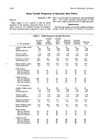
December 1966 in “Textile Research Journal” Animal hair fibers like wool and mohair are strong when dry, but vicuna fibers are very brittle.
4 citations
,
June 2022 in “ACS applied materials & interfaces” New wig coating technique makes them more durable, UV resistant, and less static.

Hair feels different when touched and rubs together in various ways.
1 citations
,
December 2022 in “Skin Research and Technology” The technique helps measure how hair styling ingredients affect hair's stiffness and flexibility.
16 citations
,
January 1977 12 citations
,
February 2011 in “Zenodo (CERN European Organization for Nuclear Research)” Hair properties vary with age and ethnic origin.
 1 citations
,
March 2005 in “International Journal of Cosmetic Science”
1 citations
,
March 2005 in “International Journal of Cosmetic Science” Twisting hair weakens it, but strength can be recovered at low twist levels.
January 2010 in “SÖFW-Journal” A natural moisturizer can make hair stronger.
22 citations
,
January 1985 Water makes hair more flexible, especially the outer layer.
 7 citations
,
January 1981 in “Springer eBooks”
7 citations
,
January 1981 in “Springer eBooks” Certain small molecules and polymers can change hair's physical properties and how it feels by affecting the bonds within the hair.

The new method can tell how hair fibers react to moisture after treatments.
1 citations
,
March 2010 in “International Journal of Cosmetic Science” The Aqualon SLT device measures hair stiffness and slipperiness to evaluate hair treatments.
NaOH treatment improves hair strength and suitability for textiles.
1 citations
,
January 2006 High temperatures and cosmetic processes can damage hair keratin, affecting its structure and strength.
 October 2012 in “Advanced Materials Research”
 Higher temperatures improve rabbit hair strength up to 50°C, but moisture weakens it.
 October 2023 in “Materials chemistry and physics (Print)”
 Adding keratin to a mix of cow hair and plant-based plastic makes it stronger.
Treating hair with 1M sodium hydroxide increases its friction, making it better for small medical knots.
1 citations
,
June 2014 in “[Thesis]. Manchester, UK: The University of Manchester; 2014.” Chemical modifications can alter hair's stability and flexibility, with hydrophobic interactions helping maintain structure in humid conditions.
 9 citations
,
January 1989 in “Sen'i Gakkaishi”
9 citations
,
January 1989 in “Sen'i Gakkaishi” Wool and hair fibers absorb moisture similarly due to their keratin structure, with the amount of non-crystalline areas affecting the moisture uptake.
25 citations
,
November 2012 in “Thermochimica Acta” Internal lipids in keratin fibers, like wool and hair, reduce water absorption and release.
 25 citations
,
May 2020 in “Progress in Organic Coatings”
25 citations
,
May 2020 in “Progress in Organic Coatings” Castor oil-based polyurethanes are promising for making safe, strong-performing, eco-friendly hair-styling products.