 2 citations
,
January 2022 in “Clinical, Cosmetic and Investigational Dermatology”
2 citations
,
January 2022 in “Clinical, Cosmetic and Investigational Dermatology” The refined wash test is a reliable way to measure daily hair loss and can tell the difference between different types of hair loss.
 2 citations
,
January 2000 in “Journal of Toxicologic Pathology”
2 citations
,
January 2000 in “Journal of Toxicologic Pathology” A single recessive gene causes sparse hair in certain Japanese White rabbits.
 1 citations
,
June 2017 in “Veterinary dermatology”
1 citations
,
June 2017 in “Veterinary dermatology” A cross-bred lamb with severe skin and movement issues had ichthyosis fetalis but normal vitamin A levels.
26 citations
,
January 1993 in “Dermatology” A rare case of isolated trichothiodystrophy was identified, marked by brittle hair with low sulfur content.
7 citations
,
June 2019 in “Coloration Technology” Translucent keratin films are better for testing hair dyes.
 1 citations
,
January 2024 in “Archives of Endocrinology and Metabolism”
1 citations
,
January 2024 in “Archives of Endocrinology and Metabolism” Self-assessed hirsutism scores are not reliable for clinical diagnosis but may help in screening.
29 citations
,
February 1989 in “Journal of Cutaneous Pathology” A unique hair tumor with a rippled pattern was identified, showing incomplete differentiation and unusual cell arrangements.
December 2020 in “Journal of Face Aesthetics” Trichoscopy effectively helps diagnose different types of hair loss in women.
 January 2026 in “Cosmoderma”
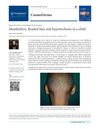
 A 9-year-old girl has a rare hair disorder causing beaded, sparse hair.
 6 citations
,
February 2016 in “American Journal of Dermatopathology”
6 citations
,
February 2016 in “American Journal of Dermatopathology” The boy with woolly hair nevus had thinner hair and abnormal hair follicles, which improved with treatment but worsened when treatment stopped.
3 citations
,
September 2016 in “Pediatric Dermatology” Hypertrichosis (excessive hair growth) can help diagnose superficial epidermolytic ichthyosis.
 February 2013 in “Journal of the American Academy of Dermatology”
 Iron supplements may reverse premature hair graying caused by iron deficiency.
13 citations
,
January 2018 in “Skin Appendage Disorders” Dermoscopy improves diagnosis and treatment planning for trichostasis spinulosa.
 31 citations
,
April 2019 in “Journal of Cutaneous Pathology”
31 citations
,
April 2019 in “Journal of Cutaneous Pathology” Hair becomes gray and thin as we age, and while most hair loss in older people is due to genetics, there's a chance for gray hair to regain color under certain conditions.
21 citations
,
June 1992 in “Pediatric Dermatology” Eruptive vellus hair cysts are often underreported and need histologic confirmation for accurate diagnosis.
 2 citations
,
November 2022 in “IP Indian journal of clinical and experimental dermatology”
2 citations
,
November 2022 in “IP Indian journal of clinical and experimental dermatology” Dermoscopic and histopathological features combined can help diagnose Pityriasis versicolor.
January 2022 in “Clinical Cases in Dermatology” Scalp psoriasis is hard to treat and may need various medications.
SLE patients experience hair loss similar to telogen effluvium, with hair damage and immune activity at hair follicles.
8 citations
,
January 2014 in “Indian Dermatology Online Journal” Trichostasis spinulosa is a common but often unnoticed skin condition involving bundled vellus hairs, especially in people with darker skin or UV exposure.
 May 2012 in “Faculty Opinions – Post-Publication Peer Review of the Biomedical Literature”
 A simple method using the wash test and dermatoscopy can help differentiate between two hair loss conditions, androgenetic alopecia and chronic telogen effluvium.
18 citations
,
May 2023 in “Science Advances” Activating the sonic hedgehog pathway in chicken embryos can permanently change scales to feathers.
 24 citations
,
September 2012 in “Dermatologic Surgery”
24 citations
,
September 2012 in “Dermatologic Surgery” The conclusion is that normal scalp hair counts for Taiwanese people were established, showing age-related differences but not sex or scalp location differences.
 June 2023 in “Italian journal of dermatology and venereology”
 Trichoscopy effectively diagnoses allergic scalp contact dermatitis.
1 citations
,
January 2022 in “Clinical dermatology review” A young man's cheek papule was identified as a benign hair follicle tumor using a skin surface microscope.
 3 citations
,
January 2015 in “Journal of clinical and diagnostic research”
3 citations
,
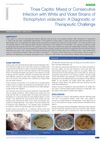
January 2015 in “Journal of clinical and diagnostic research” Treating a boy's scalp infection was challenging because two different colors of the same fungus appeared.
17 citations
,
November 1967 in “American Journal of Anatomy” Hairless mice have longer hair follicles and abnormal structures during the catagen phase.
7 citations
,
January 2008 in “Indian Journal of Dermatology” Pigmentary mosaicism causes skin color changes and can affect multiple body systems, but has no cure.
8 citations
,
August 1971 in “Canadian Journal of Zoology” Chinchillas have specific blood and protein levels, with variations possibly linked to pregnancy or hair growth.
 September 1980 in “PubMed”
 Using selenium disulfide on guinea pigs increased hair loss.
6 citations
,
April 1971 in “Journal of Wildlife Diseases” Switching flying squirrels' diet from seeds to mouse chow restored their hair.