48 citations
,
January 2002 in “Journal of Structural Biology” Trichocyte filaments have a low-density core and may include proteins for hair structure.
 4 citations
,
April 2016 in “Plastic and reconstructive surgery. Global open”
4 citations
,
April 2016 in “Plastic and reconstructive surgery. Global open” Scalp medical tattooing effectively camouflages bifid parietal whorls.
1 citations
,
September 2017 in “BMJ” The man has a disease causing skin patches, thickened nerves, and mild muscle weakness.
 April 2026 in “Cosmetics”
 The shampoo effectively covers gray hair gradually and maintains color after multiple washes.
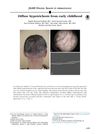 September 2016 in “Journal of The American Academy of Dermatology”
 The girl has a genetic hair condition causing thin hair since childhood.
 August 2024 in “Biophysics Reviews”
 Mammal hairs have different internal structures.
January 1998 in “The Nishinihon Journal of Dermatology” A 7-year-old girl was diagnosed with Netherton's Syndrome, shown by skin and hair symptoms.
 1 citations
,
November 2014 in “Journal of Biomedical Optics”
1 citations
,
November 2014 in “Journal of Biomedical Optics” Reflectance spectroscopy can noninvasively track hair growth stages by measuring skin reflectance and melanin changes.
March 2007 in “International Journal of Cosmetic Science” Hair with more melanin resists weather damage better.
January 2020 in “International journal of scientific research” Dermoscopy shows that varying hair shaft thickness and single hair follicles are main signs of male pattern baldness, especially in the fronto-temporal region.