November 2025 in “Agriculture” Machine learning can effectively identify genes to improve wool quality in sheep.
10 citations
,
September 2021 in “American Journal of Medical Genetics Part A” Woodhouse-Sakati syndrome shows varied symptoms, including hair loss and diabetes, and is common in Qatar due to a specific genetic variant.
 3 citations
,
September 2015 in “Journal of Vascular Surgery”
3 citations
,
September 2015 in “Journal of Vascular Surgery” Chemical lumbar sympathectomy is an effective and safe treatment for idiopathic livedo reticularis.
1 citations
,
July 2024 in “JCEM Case Reports” A new genetic variant of Woodhouse-Sakati syndrome was found in two adult sisters in Russia.
August 2022 in “Biomedicines” Turning off the Lhx2 gene in mouse embryos leads to slower wound healing and scars.
 April 2026 in “International Journal of Clinical Case Reports and Reviews”
 A new non-invasive laser system improves chronic disease management and metabolic health.
6 citations
,
October 2020 in “Frontiers in cell and developmental biology” WWOX deficiency in mice causes skin and fat tissue problems due to disrupted cell survival signals.
28 citations
,
May 2000 in “Proceedings of the National Academy of Sciences” The Walleye dermal sarcoma virus cyclin causes excessive skin cell growth in mice.
 September 2023 in “Journal of microbiology and biotechnology”
 A type of collagen helps hair grow by boosting cell growth and activating a specific hair growth pathway.
 1 citations
,
December 2022 in “Pediatric dermatology”
1 citations
,
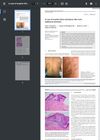
December 2022 in “Pediatric dermatology” A boy developed a rare skin condition after recovering from a severe skin reaction, and it improved with lotion treatment.
 December 2025 in “Biological and Clinical Sciences Research Journal”
 The Waris Hairline Dot Technique is highly effective, natural-looking, and has minimal recovery issues.
 31 citations
,
November 2000 in “Clinical and Experimental Dermatology”
31 citations
,
November 2000 in “Clinical and Experimental Dermatology” WAA-QOL measures impact of hair loss on women's well-being.
 1 citations
,
February 2018 in “British Journal of Dermatology”
1 citations
,
February 2018 in “British Journal of Dermatology” The CWARTS tool is a promising method for assessing warts and could improve treatment and research.
 November 2022 in “Van Sağlık Bilimleri Dergisi”
 Turkish Van cats' genotypes don't affect traits like eye color or hair length.
 April 2016 in “Journal of Investigative Dermatology”
 Full thickness wounds on Lanyu pigs' skin resulted in abnormal skin structure and function due to changes in molecular expression patterns.
7 citations
,
April 2000 in “Mammalian Genome” A new mutation in mice causes crooked whiskers and messy hair.

Wavy sinus hairs in cats are linked to feline leukemia virus infection.
12 citations
,
March 2012 in “JEADV. Journal of the European Academy of Dermatology and Venereology/Journal of the European Academy of Dermatology and Venereology” A specific gene mutation in Japanese people can cause varying degrees of hair thinning in adulthood.
 91 citations
,
December 2010 in “Stem Cells”
91 citations
,
December 2010 in “Stem Cells” Wnt signaling helps control how brain stem cells divide and is important for brain repair after injury.
 December 2025 in “Frontiers in Medicine”
 ARWH is a rare hair disorder with no cure, but potential treatments include minoxidil and other therapies.
April 2023 in “Journal of Investigative Dermatology” RNase L suppresses regeneration in mammals.
September 2025 in “Indian Journal of Dermatology” A Turkish woman has a hair condition caused by a LIPH gene mutation.
 April 2023 in “Journal of Investigative Dermatology”
 An elderly woman's upper lip lump, thought to be a mucocele, was actually a rare type of lymphoma usually found on legs, treated successfully with chemotherapy and radiation.
 July 1998 in “Proceedings of SPIE”
 Low-power laser therapy is an effective, side-effect-free treatment that speeds up hair regrowth and crural ulcer healing.
11 citations
,
April 2012 in “Journal of Investigative Dermatology” A specific mutation in PA-PLA1α causes abnormal hair growth.
 April 2010 in “The Journal of Urology”
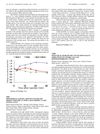
 Human prostate cells produce more WISP1/CCN4 when there's not enough oxygen.
 10 citations
,
June 2019 in “Case reports in dermatology”
10 citations
,
June 2019 in “Case reports in dermatology” LALPS causes non-scarring hair loss along the Blaschko line, with unique trichoscopic findings.
 326 citations
,
February 2009 in “The American journal of pathology”
326 citations
,
February 2009 in “The American journal of pathology” Lgr5 is a marker for active, self-renewing stem cells in the intestine and skin, important for tissue maintenance.
A rare genetic mutation causes Woodhouse-Sakati syndrome symptoms.
 15 citations
,
May 2017 in “Lasers in Medical Science”
15 citations
,
May 2017 in “Lasers in Medical Science” Low-level laser treatment helps mice grow hair by increasing certain protein levels linked to hair growth.