 February 2026 in “Orphanet Journal of Rare Diseases”
 Most genetic mutations causing hypohidrotic ectodermal dysplasia in Russian patients are found in the EDA gene.
Wnt10b promotes hair growth, while SFRP2 inhibits it in Wanxi Angora rabbits.
 89 citations
,
September 2010 in “Annual Review of Genomics and Human Genetics”
89 citations
,
September 2010 in “Annual Review of Genomics and Human Genetics” The document concludes that understanding the genes and pathways involved in hair growth is crucial for developing treatments for hair diseases.
 12 citations
,
January 2016 in “Journal of Orofacial Orthopedics / Fortschritte der Kieferorthopädie”
12 citations
,
January 2016 in “Journal of Orofacial Orthopedics / Fortschritte der Kieferorthopädie” Researchers found a new mutation in the EDA gene that likely causes missing teeth and mild skin symptoms in one family.
 1 citations
,
September 2023 in “British journal of dermatology/British journal of dermatology, Supplement”
1 citations
,
September 2023 in “British journal of dermatology/British journal of dermatology, Supplement” WNT10A gene mutations cause short anagen hair syndrome.
 1 citations
,
November 2017 in “Expert opinion on orphan drugs”
1 citations
,
November 2017 in “Expert opinion on orphan drugs” Scientists now better understand the genetics of hypohidrotic ectodermal dysplasia, leading to more accurate diagnoses and potential new treatments.
 1 citations
,
February 2013 in “InTech eBooks”
1 citations
,
February 2013 in “InTech eBooks” Genetic mutations cause various hair diseases, and whole genome sequencing may reveal more about these conditions.
 November 2023 in “British Journal of Dermatology”
 Mutations in the WNT10A gene cause Short Anagen Hair syndrome and increase the risk of male pattern hair loss.
16 citations
,
December 2020 in “PloS one” Researchers found WNT10A to be a key gene in developing goat hair follicles.
 74 citations
,
January 2013 in “Journal of Investigative Dermatology”
74 citations
,
January 2013 in “Journal of Investigative Dermatology” Four genetic risk spots found for hair loss, with WNT signaling involved and a link to curly hair.
 14 citations
,
June 2022 in “BMC genomics”
14 citations
,
June 2022 in “BMC genomics” Key genes crucial for sheep hair follicle development were identified, aiding fine wool breeding and human hair loss research.
 September 2022 in “bioRxiv (Cold Spring Harbor Laboratory)”
 The research provided new insights into the genetic factors contributing to hair loss and skin conditions by analyzing individual cells from the human scalp.
 February 2022 in “Research Square (Research Square)”
 Key genes influencing sheep hair follicle development were identified, aiding wool breeding and understanding human hair conditions.
April 2023 in “Medizinische Genetik” Male-pattern hair loss is largely influenced by genetics, with key genes identified.
 January 2013 in “Faculty of Health; Institute of Health and Biomedical Innovation”
 Four genetic risk areas related to male-pattern baldness were identified, with WNT signaling playing a role in its development.
 23 citations
,
May 2020 in “Cell Death and Disease”
23 citations
,
May 2020 in “Cell Death and Disease” Blocking the FGF5 gene in sheep leads to more fine wool and active hair follicles due to changes in certain cell signaling pathways.
7 citations
,
December 2019 in “Experimental and Therapeutic Medicine” WNT10B affects hair growth by altering gene activity in hair cells.
 2 citations
,
June 2017 in “Journal of biomedicine and translational research”
2 citations
,
June 2017 in “Journal of biomedicine and translational research” Lychee fruit polyphenol (Oligonol®) may regulate genes linked to cell growth and inflammation in human scalp cells.
 June 2021 in “Dermatology Online Journal”
 A girl with a rare genetic condition affecting hair and nails also developed a common type of hair loss, suggesting a possible genetic link.
 7 citations
,
August 2020 in “Animal biotechnology”
7 citations
,
August 2020 in “Animal biotechnology” A specific RNA in cashmere goats helps improve hair growth by interacting with certain molecules.
1 citations
,
May 2024 in “Preprints.org” Rex rabbit fur is best harvested at 120 days for optimal hair density and quality.
 61 citations
,
June 2014 in “Scientific Reports”
61 citations
,
June 2014 in “Scientific Reports” Wnt1a-conditioned medium from stem cells helps activate cells important for hair growth and can promote hair regrowth.
 May 2025 in “Frontiers in Bioengineering and Biotechnology”
 EX104 shows promise in treating hair loss by promoting hair growth and improving scalp health.
May 2025 in “OPAL (Open@LaTrobe) (La Trobe University)” EX104 effectively promotes hair growth and regenerates follicles in androgenetic alopecia.
 14 citations
,
September 2018 in “Asian-Australasian Journal of Animal Sciences”
14 citations
,
September 2018 in “Asian-Australasian Journal of Animal Sciences” Rex rabbits' hair follicles develop dynamically in the first 8 weeks, with key genes and proteins changing over time.
 May 2020 in “bioRxiv (Cold Spring Harbor Laboratory)”
 The study found that certain genes are important for hedgehog skin appendage development and immunity, with spines possibly evolving for protection and infection resistance.
 September 2023 in “British Journal of Dermatology”
 Some cases of short anagen hair syndrome are linked to specific genetic variations that are also connected to male pattern baldness.
May 2025 in “Journal of Traditional Chinese Medical Sciences” Stellera chamaejasme L. extract promotes hair growth by activating hair growth genes.
 28 citations
,
February 2010 in “British journal of dermatology/British journal of dermatology, Supplement”
28 citations
,
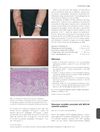
February 2010 in “British journal of dermatology/British journal of dermatology, Supplement” WNT10A mutations cause varied symptoms in patients with odonto-onycho-dermal dysplasia.
January 2024 in “Open MIND” Rare genetic variants contribute to male pattern hair loss, but there's no link to severe COVID-19.