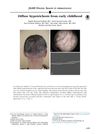
 September 2016 in “Journal of The American Academy of Dermatology”
 The girl has a genetic hair condition causing thin hair since childhood.
 April 2026 in “Dermatology and Therapy”
 Experts agree on understanding hair aging to improve diagnosis and treatments.
 99 citations
,
June 2005 in “Journal of Cosmetic Dermatology”
99 citations
,
June 2005 in “Journal of Cosmetic Dermatology” Hair ages due to genetics and environmental factors, leading to graying and thinning, with treatments available for some conditions.
1 citations
,
March 2005 in “Hair transplant forum international” Female pattern hair loss in women can be due to hormones or aging.
 68 citations
,
February 1990 in “Journal of Applied Social Psychology”
68 citations
,
February 1990 in “Journal of Applied Social Psychology” Bald men are often viewed more negatively and as older than they really are.
September 2016 in “Journal of dermatological science” The conclusion is that the variation in hair thinness in patients is mostly due to the amount of underdeveloped hairs, and treatments that thicken fine hairs might work for those with mild to severe conditions.
 September 2017 in “Journal of Investigative Dermatology”
 Aging causes sweat glands to shrink, leading to skin issues, and blue light can help hair grow.
February 2022 in “Cosmetic Dermatology” Different hair care methods affect hair health and appearance, and there are many ways to camouflage hair loss.
2 citations
,
July 2019 in “Indian dermatology online journal” A 17-year-old girl and her brothers have a rare hair condition with long eyelashes, thick eyebrows, and easily pluckable hair.
December 2015 in “European Journal of Pediatric Dermatology” Newborns can experience temporary hair loss in bands, unrelated to sleeping position.
 July 2012 in “British Journal of Dermatology”
 Women generally want more hair volume, which becomes a concern around menopause due to hair loss.
 July 2024 in “Clinical and Experimental Dermatology”
 Hair loss patterns in Asian and Black women are unique and may affect treatment.
6 citations
,
January 1989 Synthetic hair implants can be used to cover small bald spots.
 11 citations
,
January 2004 in “Exogenous dermatology”
11 citations
,
January 2004 in “Exogenous dermatology” Outside factors like grooming, chemicals, and the environment can damage hair and cause disorders.
 10 citations
,
October 2020 in “Frontiers in Cell and Developmental Biology”
10 citations
,
October 2020 in “Frontiers in Cell and Developmental Biology” Wounds can regenerate hair in young mice, but this ability declines with age, offering insights for improving tissue regeneration in the elderly.
1 citations
,
April 2015 in “Munich Personal RePEc Archive (Ludwig Maximilian University of Munich)” Skin and hair aging involves mitochondrial issues, telomere shortening, and hormonal changes, with iron affecting hair loss in pre-menopausal women.
October 2017 in “Chinese Journal of Dermatology”  August 2025 in “International Journal of Dermatology”
 Hair loss significantly influences medical decisions, affecting treatment choices and emotional well-being.
May 2014 in “Dermatology Times”  April 2019 in “Dermatology reports”
 A 12-year-old boy's hair fully regrew after 8 weeks of treatment for tinea capitis, and dermoscopy was useful for diagnosis and monitoring.
2 citations
,
January 1972 Hair can measure exposure to radioisotopes.
 August 2011 in “Clinical and Experimental Dermatology”
 About 30% of women feel they lose too much hair, often starting before age 40, and most can't find a reason for it.
 130 citations
,
May 1988 in “Journal of The American Academy of Dermatology”
130 citations
,
May 1988 in “Journal of The American Academy of Dermatology” "Male-pattern" hair loss is common in women, especially after menopause, and doesn't always mean there's a problem with hormone balance.
5 citations
,
January 2016 in “International Journal of Trichology” Erlotinib can cause hair loss and texture changes.
 7 citations
,
November 2014 in “Histochemistry and Cell Biology”
7 citations
,
November 2014 in “Histochemistry and Cell Biology” The we/we wal/wal mice have defects in hair growth and skin layer formation, causing hair loss, useful for understanding alopecia.
9 citations
,
February 1966 in “British Journal of Dermatology”  January 2024 in “Indian Journal of Dermatology”
 Women with female pattern hair loss may have a higher risk of heart problems.
 January 2024 in “Journal of cutaneous and aesthetic surgery”
 Scalp injuries and harsh hair care can cause severe hair matting in children.