 December 2023 in “bioRxiv (Cold Spring Harbor Laboratory)”
 Aged individuals heal wounds less effectively due to specific immune cell issues.
October 2021 in “Postepy Dermatologii I Alergologii” March 2019 in “Dermatologic Surgery” 67 citations
,
December 2009 in “International Journal of Dermatology” Hormonal changes in skin may cause stretch marks.
 April 2018 in “Journal of Investigative Dermatology”
 Fetuin A, Anigozanthos Flavidus extract, and Ovol2 affect wound healing and skin regeneration.
June 2021 in “Faculty Opinions – Post-Publication Peer Review of the Biomedical Literature”  8 citations
,
June 2022 in “International Journal of Molecular Sciences”
8 citations
,
June 2022 in “International Journal of Molecular Sciences” Tiny particles called extracellular vesicles show promise for skin improvement and anti-aging in facial care but face challenges like low production and lack of research.
59 citations
,
September 2011 in “Lasers in Medical Science” The 800-nm laser boosts skin collagen production, improving skin structure.
 July 2022 in “The journal of investigative dermatology/Journal of investigative dermatology”
 Increasing type 17 collagen reduces aging signs in skin cells caused by UV light.
 8 citations
,
October 2017 in “Dermatologic surgery”
8 citations
,
October 2017 in “Dermatologic surgery” Maintain a natural, masculine look while rejuvenating the eye area with careful, tailored techniques.
29 citations
,
July 2015 in “Journal of Medical Genetics” A genetic variant in the KRT25 gene causes tightly curled hair.
October 2024 in “Skin Research and Technology” Pili annulati causes zebra-striped hair but doesn't affect hair strength or quality of life.
December 1989 in “PubMed”  28 citations
,
October 2019 in “Seminars in Cell & Developmental Biology”
28 citations
,
October 2019 in “Seminars in Cell & Developmental Biology” Hair can regrow in large wounds through a process similar to how hair forms in embryos, and understanding this could lead to new treatments for hair loss or scarring.
October 2020 in “Research Square (Research Square)” Aging-related changes in hair follicle stem cells can be partially reversed with a specific treatment.
 April 2026 in “International Journal of Molecular Sciences”
 Wnt signaling is crucial for skin, hair, and nail health and regeneration.
Deleting Twist1 in skin cells reduces UVB-induced skin cancer risk.

Elastin-like recombinamers show promise for better wound healing and skin regeneration.
46 citations
,
August 2006 in “Mechanisms of Development” Runx1 is crucial for proper hair structure and development.
 April 2017 in “Journal of Investigative Dermatology”
 Removing the Crif1 gene in mouse skin disrupts skin balance and hair growth.
 October 2023 in “Dermatological reviews”
 Fibroblast-derived growth factors and exosomes can significantly improve skin aging.
 February 2025 in “Science Advances”
 Wnt signaling helps regenerate hair follicles by affecting how skin cells sense and respond to mechanical forces.
5 citations
,
October 2020 in “bioRxiv (Cold Spring Harbor Laboratory)” Aging hair follicle stem cells can be rejuvenated by inhibiting Cdc42.
 January 2005 in “Seibutsu Butsuri/Seibutsu butsuri”
 Chemical treatments damage hair more than UV exposure, making it thinner and less flexible.
 4 citations
,
December 2021 in “The journal of investigative dermatology/Journal of investigative dermatology”
4 citations
,
December 2021 in “The journal of investigative dermatology/Journal of investigative dermatology” Overactive Wnt signaling in mouse skin stem cells causes acne-like cysts and shrinking oil glands, which some treatments can partially fix.
 15 citations
,
October 2006 in “Journal of the American Academy of Dermatology”
15 citations
,
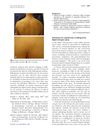
October 2006 in “Journal of the American Academy of Dermatology” Liquid nitrogen spray caused a temporary, harmless swelling under the skin in an elderly woman.
 May 2026 in “Commagene Journal of Biology”
 Anti-aging peptides can improve skin appearance but need better delivery methods and more research.
May 2025 in “Experimental Dermatology” A new genetic tool improves the study of hair growth and potential hair disorder treatments.
 84 citations
,
October 2014 in “PLoS Genetics”
84 citations
,
October 2014 in “PLoS Genetics” Wnt signaling is essential for forming the skin's spinous layer through a BMP-FGF pathway.