1 citations
,
January 2023 in “Frontiers in Physiology” The method allows precise cell removal without harming nearby tissues.
 103 citations
,
January 2011 in “Blood”
103 citations
,
January 2011 in “Blood” Thymus transplantation successfully restored immune function in infants with FOXN1 deficiency.
6 citations
,
February 2009 in “Journal of Investigative Dermatology” 158 citations
,
February 2012 in “Journal of Investigative Dermatology” FGF18 helps keep hair in its resting phase, affecting hair growth cycles.
 1 citations
,
October 2023 in “Journal of the Pakistan Medical Association”
1 citations
,
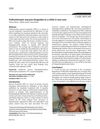
October 2023 in “Journal of the Pakistan Medical Association” Folliculotropic mycosis fungoides can occur in children and is diagnosed with specific tests, but often stays in early stages with treatment.
9 citations
,
November 2022 in “Biology” Key genes and pathways influence wool traits in Merino sheep.
1 citations
,
April 1998 in “PubMed” Nexin 1 helps control hair growth in young rats.
2 citations
,
March 2011 in “International Journal of Dermatology” An 18-year-old man was diagnosed with a rare genetic disorder causing hair loss, severe light sensitivity, and skin issues.
September 2017 in “Korean journal of acupuncture” Crataegi Fructus water extract helps hair grow better and thicker.
23 citations
,
March 2023 in “eLife” Stem cell differentiation involves gradual chromatin changes and dynamic gene activity.
 4 citations
,
December 2013 in “British Journal of Dermatology”
4 citations
,
December 2013 in “British Journal of Dermatology” ESR2 gene linked to female-pattern hair loss.
69 citations
,
May 1997 in “Veterinary Pathology” The angora mouse mutation causes long hair and hair defects due to a gene deletion.
 January 2017 in “Jikken doubutsu ihou/Jikken doubutsu/Experimental animals/Jikken Dobutsu”
 Mice with a changed Hr gene lose and regrow hair due to changes in the gene's activity.
1 citations
,
October 2021 in “The journal of investigative dermatology/Journal of investigative dermatology” Removing HIF-P4H-2 from certain skin cells in mice causes hair loss on the body but not the head.
 38 citations
,
April 2017 in “PLOS Genetics”
38 citations
,
April 2017 in “PLOS Genetics” GRHL3 is important for controlling gene activity in skin cells during different stages of their development.
 8 citations
,
July 2019 in “Cell Proliferation”
8 citations
,
July 2019 in “Cell Proliferation” Researchers found a way to turn skin cells into cells that can grow new hair.
September 2025 in “Science Advances” PADI4 enzyme slows down cell growth in developing hair follicles.
55 citations
,
November 2010 in “Development” Hair follicles in mutant mice self-organize into ordered patterns within a week.
January 2012 in “Zhongguo nongye Kexue” The technology can create transgenic cashmere goats with improved wool quality.
12 citations
,
December 2023 in “Plant Communications” ADF8 and ADF11 help root hairs grow longer at high pH.
115 citations
,
December 2019 in “The Plant Journal” Nitrate helps plants manage phosphate uptake and starvation responses through NIGT1 proteins.
 August 2019 in “Journal of Investigative Dermatology”
 Frog skin cells need the protein desmoplakin for proper development and cell layer formation.
January 2024 in “Kafkas Universitesi Veteriner Fakultesi Dergisi” A specific genetic variation affects wool quality in sheep.
Tan sheep's unique fur traits are determined during the embryonic stage by specific genes.
 14 citations
,
December 2010 in “Journal of human genetics”
14 citations
,
December 2010 in “Journal of human genetics” A Japanese patient with IFAP syndrome had a severe MBTPS2 gene mutation but showed milder symptoms than previously observed cases.
 4 citations
,
August 2019 in “General and Comparative Endocrinology”
4 citations
,
August 2019 in “General and Comparative Endocrinology” Male yak hair growth is influenced by DHT synthesis, which is promoted by 5α-red1 and AR during growth phases, while E2 may inhibit growth through ERα.
 December 2025 in “Frontiers in Veterinary Science”
 Key genes like KRT27 and IGF-2 are crucial for hair follicle development in Qianhua Mutton Merino sheep.
 81 citations
,
October 2014 in “The journal of investigative dermatology/Journal of investigative dermatology”
81 citations
,
October 2014 in “The journal of investigative dermatology/Journal of investigative dermatology” Certain genes control the color of human hair by affecting pigment production.
 January 2025 in “Cell Communication and Signaling”
 CXXC5 can both suppress and promote cancer, making it a complex target for treatment.