 1 citations
,
July 2019 in “Medicina Clínica (English Edition)”
1 citations
,
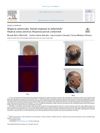
July 2019 in “Medicina Clínica (English Edition)” Tofacitinib partially improved hair regrowth in a patient with severe hair loss.
 5 citations
,
August 2018 in “PubMed”
5 citations
,
August 2018 in “PubMed” An 8-year-old with severe hair loss regrew all hair after six months of tofacitinib treatment.
19 citations
,
April 2016 in “Case Reports in Dermatology” Nilotinib can cause keratosis pilaris, a skin condition.
 September 2023 in “JAAD case reports”
 A man developed oral hairy leukoplakia while on baricitinib, a medication for alopecia and arthritis, and doctors should watch for such side effects.
227 citations
,
April 2023 in “The Lancet” Ritlecitinib effectively treats alopecia areata and is well-tolerated.
July 2022 in “Journal of Investigative Dermatology” 
BMD-1141 effectively regrows hair in alopecia areata with less frequent dosing than current treatments.
 November 2025 in “Mendeley Data”
 JAK inhibitors can be safely used in alopecia areata patients with latent hepatitis B or tuberculosis, with proper monitoring.
 June 2023 in “British Journal of Dermatology”
 Baricitinib was effective in treating severe and very severe alopecia areata after 52 weeks.
 January 2024 in “Journal of dermatology and skin science”
 Topical aprepitant reduces skin rash and hair loss caused by cancer treatment.
 September 2023 in “SKIN The Journal of Cutaneous Medicine”
 Talquetamab may cause hair loss and skin issues.
 11 citations
,
October 2001 in “Dermatologic Clinics”
11 citations
,
October 2001 in “Dermatologic Clinics” The document concludes that DAB389-IL2 is promising for treating refractory cutaneous T-cell lymphoma, but more research is needed on its effectiveness and side effect management.
December 2022 in “Zenodo (CERN European Organization for Nuclear Research)” Tofacitinib effectively treated severe alopecia areata in a 14-year-old girl.
 November 2025 in “Mendeley Data”
 JAK inhibitors can be safely used for alopecia areata in patients with latent hepatitis B or stable tuberculosis with proper monitoring.
 September 2024 in “Journal of the American Academy of Dermatology”
 Baricitinib maintains significant hair regrowth in severe alopecia areata over three years.
3 citations
,
April 2025 in “American Journal of Clinical Dermatology” Baricitinib is generally safe for long-term use in treating severe alopecia areata.
Baricitinib is effective for Alopecia Areata but requires careful patient history evaluation.
 July 2022 in “International Journal of Trichology”
 Tofacitinib helped an 8-year-old child recover from a type of hair loss that is hard to treat.
 1 citations
,
September 2023 in “Dermatology and Therapy”
1 citations
,
September 2023 in “Dermatology and Therapy” Baricitinib helps improve hair growth in severe alopecia, with better results in less severe cases and higher doses working faster.
Deuruxolitinib effectively promotes hair regrowth in alopecia areata.
April 2017 in “Leukemia research” Tofacitinib helped most teenagers in the study regrow hair with mild side effects.
4 citations
,
March 2008 in “Journal of the American Academy of Dermatology”  28 citations
,
December 2017 in “Journal of Investigative Dermatology Symposium Proceedings”
28 citations
,
December 2017 in “Journal of Investigative Dermatology Symposium Proceedings” Tofacitinib shows promise for treating severe hair loss in adults and teens, with many experiencing regrowth, but hair loss returns when treatment stops.
 January 2021 in “Journal of Cancer Therapy”
 Tyrosine Kinase Inhibitors are effective against cancer but can cause skin, digestive, and blood side effects, including hair loss.
August 2024 in “British Journal of Dermatology” Rezpegaldesleukin shows promise for treating severe alopecia areata.
September 2025 in “Journal of the American Academy of Dermatology” Deuruxolitinib improves anxiety and depression in severe alopecia areata patients.
February 2026 in “The Journal of Dermatology” Ritlecitinib effectively regrows scalp, eyebrow, and eyelash hair in Asians with alopecia areata and is safe.
 September 2020 in “Acta Scientific Cancer Biology”
 Personalized treatment based on detailed tumor analysis successfully managed and reduced the patient's aggressive hair follicle cancer.
 June 2025 in “International Journal of Science and Research (IJSR)”
 Tofacitinib effectively promotes hair regrowth in alopecia areata with minimal side effects.
 2 citations
,
April 2017 in “Journal of Investigative Dermatology”
2 citations
,
April 2017 in “Journal of Investigative Dermatology” Tofacitinib helped over half of the patients with severe hair loss regrow at least 50% of their hair.