2 citations
,
July 2025 in “Analytical Chemistry” The method effectively images and correlates elements and metabolites in tissue samples at a micron scale.
 1 citations
,
March 2015 in “Journal of Visualized Experiments”
1 citations
,
March 2015 in “Journal of Visualized Experiments” Researchers developed a new, precise method to measure hair loss in mice using image analysis.
 November 2022 in “The journal of investigative dermatology/Journal of investigative dermatology”
 New imaging technology can show up to 40 different markers in hair loss tissue, helping to understand hair disease better.
March 2026 in “Mendeley Data” March 2026 in “Mendeley Data” January 2017 in “British journal of dermatology/British journal of dermatology, Supplement” September 2017 in “Journal of Investigative Dermatology” QMSI effectively maps and quantifies drug distribution in skin tissues.
 9 citations
,
January 2020 in “IEEE Access”
9 citations
,
January 2020 in “IEEE Access” The KEBOT system is a highly accurate AI tool for analyzing hair transplants.
 March 2015 in “Journal of Visualized Experiments”
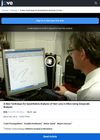
 A new method measures mouse hair loss using shades of gray.
 5 citations
,
February 2015 in “Dermatologica Sinica”
5 citations
,
February 2015 in “Dermatologica Sinica” Computer-aided imaging system helps measure balding area in female pattern hair loss.
The tool accurately measures hair count and size on scalps with 79.45% and 68.19% accuracy, respectively.
September 2025 in “The Open Dermatology Journal” The AI showed high accuracy in diagnosing skin conditions but needs improvement for immunological and infectious disorders.
1 citations
,
January 2026 in “GigaScience” Cell Journey is a tool for better 3D visualization of cell changes over time.
 December 2022 in “Research Square (Research Square)”
 The QuantAnts machines can find cancer markers and create CRISPR targets for them.
 April 2017 in “The journal of investigative dermatology/Journal of investigative dermatology”
 QMSI is a valuable method for studying drug penetration in skin tissues.
 1 citations
,
December 2024 in “Dermatology and Therapy”
1 citations
,
December 2024 in “Dermatology and Therapy” The STRIAA tool helps doctors quickly and effectively assess the severity of Alopecia Areata.
September 2020 in “Zenodo (CERN European Organization for Nuclear Research)” Reducing Zyxin may help treat hair loss.
 January 2018 in “Communications in computer and information science”
 Researchers developed a computer system to automatically diagnose hair loss by analyzing scalp images.
 November 2025 in “Scientific Reports”
 AI improves accuracy and consistency in diagnosing male pattern hair loss.
August 2023 in “Zenodo (CERN European Organization for Nuclear Research)” August 2003 in “Special report” TrichoScan offers a painless way to analyze and manage hair loss.
2 citations
,
September 2025 in “JDDG Journal der Deutschen Dermatologischen Gesellschaft” AI can accurately diagnose and assess alopecia areata using scalp images.
January 2019 in “Florida International University Digital Commons (Florida International University)” TOF-SIMS improved chemical mapping in cells, confirming gunshot residue, tracking anti-tumor drugs, and identifying molecules in mosquitoes and wounds.
November 2024 in “Journal of Investigative Dermatology” Bimekizumab quickly improves psoriasis symptoms and skin at the molecular level.
 June 2025 in “International Journal of Computational Intelligence Systems”
 The TPAP method effectively categorizes androgenetic alopecia patients with high accuracy, but needs real-world validation.
 January 1963 in “Stain technology”
 Ziehl-Neelsen's stain helps identify different parts of hair in sheep and goats.
March 2026 in “Journal of the European Academy of Dermatology and Venereology” VESALT improves alopecia areata assessment by including non-scalp areas and is reliable and user-friendly.
 September 2019 in “Journal of Investigative Dermatology”
 Four botanical extracts were found to quickly attract neutrophils to wounded skin in zebrafish.
April 2025 in “Journal of Cosmetic Dermatology” The AI device accurately grades scalp exfoliation and can help diagnose scalp disorders.