54 citations
,
March 1991 in “Proceedings of the National Academy of Sciences” This model can replace animal testing for quick, cost-effective skin toxicity tests.
22 citations
,
May 2007 in “Molecular Biotechnology” 21 citations
,
September 1997 in “British Journal of Dermatology” Monilethrix is linked to the type II keratin gene on chromosome 12q13.
 November 2022 in “Nihon Nyuusankin Gakkaishi/Nihon Nyūsankin Gakkaishi”
 The lotion with N793 strain significantly increased hair density and reduced hair loss safely.
35 citations
,
December 2008 in “PubMed” Trichilemmoma, BCC, and SCC tumors have different stem cell marker expressions.
59 citations
,
September 2021 in “Journal of Allergy and Clinical Immunology” Netherton syndrome has two subtypes with shared immune traits but different allergic and immune responses, suggesting targeted treatments.
January 2025 in “Journal of Imaging Informatics in Medicine” 
Researchers developed a method to identify and measure different animal hair fibers in textiles, successfully distinguishing materials like cashmere from cheaper fibers.
16 citations
,
November 2008 in “Journal of the American Academy of Dermatology” Consider necrolytic acral erythema in similar cases and treat with oral zinc sulfate.
1 citations
,
August 1983 in “British Journal of Dermatology” 1 citations
,
August 2023 in “Clinical Cosmetic and Investigational Dermatology” Exclamation mark hairs help distinguish syphilitic alopecia from alopecia areata.
 20 citations
,
January 2008 in “Journal of Korean Medical Science”
20 citations
,
January 2008 in “Journal of Korean Medical Science” NGAL may help maintain skin balance and is linked to skin disorders and cancers.
 28 citations
,
March 2010 in “Histochemistry and Cell Biology”
28 citations
,
March 2010 in “Histochemistry and Cell Biology” Different markers are found in stem cells of the scalp's hair follicle bulge and the surrounding skin.
2 citations
,
November 2023 in “Skin Research and Technology” RCM and dermoscopy help identify different types of hair loss in children.
 1 citations
,
July 1997 in “The Lancet”
1 citations
,
July 1997 in “The Lancet” Scientists found a new protein, AMY117, common in Alzheimer's patients, which could be important for treatment and diagnosis.
 1 citations
,
February 2014 in “Analytical Letters”
1 citations
,
February 2014 in “Analytical Letters” The method accurately measures the amount of ketoconazole in anti-dandruff shampoo and cream, and can also be used to monitor the drug in human plasma.
 April 2017 in “Journal of Investigative Dermatology”
 Researchers improved a method to study individual cells in newborn mouse skin and found a way to assess the severity of a skin condition in humans.
January 2010 in “Chinese Journal of Dermatovenereology of Integrated Traditional and Western Medicine” A unique gene mutation was found in a family with monilethrix.
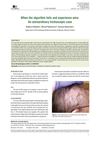 January 2026 in “Forum Dermatologicum”
 Thorough hair examination is crucial for accurate diagnosis and treatment.
211 citations
,
March 2011 in “Journal of Lipid Research” A new, quick method was developed to analyze skin lipids, discovering a new ceramide subclass.
 July 2018 in “Journal of Dairy & Veterinary Sciences”
 The dog recovered from a skin infection after treatment with medication.
5 citations
,
January 1997 in “Journal of Occupational Health” The method effectively maps lead and zinc in hair, aiding understanding of heavy metal exposure risks.
October 2009 in “Faculty Opinions – Post-Publication Peer Review of the Biomedical Literature” Researchers developed a method to label and study human hair follicle stem cells using a fluorescent protein.
 October 2020 in “Our Dermatology Online”
 Chronic bacterial infections of hair follicles can cause ongoing skin inflammation.
2 citations
,
August 1987 in “Archives of Dermatology” Langerhans' cells are not responsible for depigmentation in this mouse model.
November 2025 in “OPAL (Open@LaTrobe) (La Trobe University)” A new method helps find proteins in hair to identify fetal growth issues.
11 citations
,
January 2016 in “Mycoses” Human black hair is best for distinguishing between T. mentagrophytes and T. verrucosum.
13 citations
,
August 1985 in “The Journal of Dermatology” HKN-2 antibody targets specific skin and hair cells, showing keratin complexity.
4 citations
,
January 2006 in “International Journal of Cosmetic Science” The method shows how hair lipids form specific patterns and their roles in hair structure.