May 2024 in “Archives of Dermatological Research” TAT-GILZ peptide promotes hair growth by boosting stem cell activity.
August 2005 in “The Journal of Cell Biology” Sgk3 kinase is essential for normal hair growth in mice.
 40 citations
,
May 2012 in “British Journal of Dermatology”
40 citations
,
May 2012 in “British Journal of Dermatology” Recognizing specific features of African-American hair can help diagnose hair loss conditions.
 43 citations
,
August 2008 in “Regenerative Medicine”
43 citations
,
August 2008 in “Regenerative Medicine” Scientists created early-stage hairs from mouse cells that grew into normal, pigmented hair when implanted into other mice.
29 citations
,
July 2015 in “Journal of Medical Genetics” A genetic variant in the KRT25 gene causes tightly curled hair.
December 2025 in “ILDS-DEV”  January 2025 in “Journal of Raman Spectroscopy”
 Polarized Raman spectra can reveal changes in hair keratin's protein structures.
12 citations
,
January 2013 in “Acta Histochemica” Junctional proteins stabilize the inner root sheath and connect the companion layer in human hair.
4 citations
,
August 2015 in “PloS one” Transplanted whisker follicles caused long hair growth on the spinal cords of mice.
January 2007 in “Durham e-Theses (Durham University)” Hair growth and shedding involve specific cell changes and gene roles.
3 citations
,
January 2021 in “Medicinski arhiv” Trichoscopy, a hair loss evaluation technique, found that people with Androgenetic Alopecia have more thin hairs, yellow dots, and perifollicular discoloration than healthy individuals.
 January 2026 in “Cosmoderma”
 A 9-year-old girl has a rare hair disorder causing beaded, sparse hair.
 November 2023 in “Frontiers in veterinary science”
 The study provides insights into hair growth mechanisms in yaks.
 18 citations
,
August 2018 in “The FASEB journal”
18 citations
,
August 2018 in “The FASEB journal” Rabbits lacking the Hoxc13 gene show similar hair and skin issues to humans with ECTD-9, making them good for research on this condition.
 January 2018 in “Figshare”
 Horizontal sections of scalp biopsies are useful for telling the difference between Androgenetic Alopecia and Alopecia Areata.
2 citations
,
January 2017 Hair movement can indicate hair quality and health.
30 citations
,
January 1999 in “Journal of Cutaneous Pathology” Spiny keratoderma may be ectopic hair formation on palms and soles.
119 citations
,
November 2016 in “American journal of human genetics” Mutations in three genes cause Uncombable Hair Syndrome, leading to frizzy hair that can't be combed flat.
 August 2024 in “Journal of Animal Science and Technology”
 Angora goat hair growth is influenced by gene expression, sex hormones, and breed differences.
1 citations
,
June 2022 in “Tidsskrift for Den norske legeforening” A young boy's uncombable hair is due to a rare genetic condition that usually improves over time.
September 2020 in “Zenodo (CERN European Organization for Nuclear Research)” Reducing Zyxin may help treat hair loss.
29 citations
,
March 2012 in “Journal of Experimental Biology” Tarantula feet likely have chemoreceptors, not silk-producing parts.
December 2011 in “URMIA MEDICAL JOURNAL” Glycoconjugate sugars are important for hair follicle development.
2 citations
,
January 2007 in “Actas Dermo-Sifiliográficas” Two cases of hairy elbows syndrome were described, with normal skin texture and symmetrical hair growth.
January 2012 in “The Journal of Practical Medicine” Chinese Han individuals have fewer hair follicles and hairs than Caucasians and Africans.
20 citations
,
October 2005 in “Archives of Dermatological Research”  47 citations
,
January 2013 in “International Journal of Cosmetic Science”
47 citations
,
January 2013 in “International Journal of Cosmetic Science” Hair diversity is influenced by complex genetics and environmental factors, requiring more research for practical solutions.
May 2010 in “Faculty Opinions – Post-Publication Peer Review of the Biomedical Literature” A mutation in the KRT74 gene causes woolly hair by affecting hair texture.
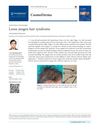 February 2023 in “Cosmoderma”
 Loose anagen hair syndrome causes easily shed hair but usually improves with time.
92 citations
,
April 2009 in “Journal of Investigative Dermatology” The Celsr1 gene is crucial for normal hair patterning in mice.