 9 citations
,
July 2018 in “European Journal of Dermatology”
9 citations
,
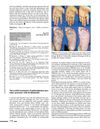
July 2018 in “European Journal of Dermatology” Brodalumab effectively treated a man's severe hand and foot psoriasis.
February 2026 in “Advanced Science” TTNPB helps turn stem cells into neural stem cells, improving depression-like behaviors in rats.
 4 citations
,
June 2021 in “Journal of Microbiology and Biotechnology”
4 citations
,
June 2021 in “Journal of Microbiology and Biotechnology” Ginsenoside Rg4 from ginseng may help hair growth by activating certain cell signals.
December 2024 in “eCommons - AKU (Aga Khan University)” PICAT is a reliable tool for assessing dermatology residents' skills in PRP procedures for hair loss.
11 citations
,
January 2022 in “Brazilian Oral Research” XP-endo Finisher R removes more root filling material than PUI in curved canals.
 April 2026 in “Human Genome Variation”
 The MBTPS2 gene variant c.970+5G>A is a common mutation causing IFAP syndrome.
39 citations
,
January 2008 in “World Journal of Gastroenterology” Pegylated interferon-alpha 2a can cause a rare nerve disorder, but early treatment can lead to full recovery.
 14 citations
,
December 2010 in “Journal of human genetics”
14 citations
,
December 2010 in “Journal of human genetics” A Japanese patient with IFAP syndrome had a severe MBTPS2 gene mutation but showed milder symptoms than previously observed cases.
 July 2013 in “Science-business Exchange”
 Blocking SEPT4 might help heal wounds and regrow hair faster.
A protein called sFRP4 can partly inhibit hair growth.
 6 citations
,
February 2023 in “Journal of nanobiotechnology”
6 citations
,
February 2023 in “Journal of nanobiotechnology” The new anti-acne treatment HA-P5 effectively reduces acne by targeting two key receptors and avoids an enzyme that can hinder treatment.
 9 citations
,
November 2021 in “Frontiers in Cell and Developmental Biology”
9 citations
,
November 2021 in “Frontiers in Cell and Developmental Biology” PBX1 helps reduce aging and cell death in hair follicle stem cells by decreasing DNA damage, not by improving DNA repair.
 October 2023 in “Facial Plastic Surgery”
 The PHAT technique effectively rejuvenates lips and face.
14 citations
,
August 2020 in “Journal of cosmetic dermatology” Experts recommend using PN-HPT™ for skin rejuvenation in various body areas but have less agreement on initial facial treatment cycles.
 11 citations
,
June 2012 in “Journal of Dermatological Science”
11 citations
,
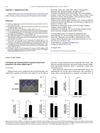
June 2012 in “Journal of Dermatological Science” Scientists identified a group of human skin cells with high growth and regeneration potential.
Photobiomodulation effectively improves skin and hair conditions with minimal side effects.
82 citations
,
January 2011 in “New Phytologist” VILLIN4 helps root hair growth by organizing actin with calcium.
EDM is better for isolating and growing human foreskin fibroblasts, and PPP helps repair UVB damage.
 April 2023 in “Journal of Investigative Dermatology”
 POUF51 and HES3 are key in controlling stem cell numbers in psoriasis.
16 citations
,
April 2025 in “Journal of the American Academy of Dermatology” Photobiomodulation is safe and effective for treating certain conditions like nerve pain and hair loss.
 1 citations
,
April 2018 in “Journal of Investigative Dermatology”
1 citations
,
April 2018 in “Journal of Investigative Dermatology” PRC1 is essential for proper skin development and stem cell formation by controlling gene activity.
Combining ATRA with TPO-RA effectively stabilizes platelet counts in ITP patients.
 July 2026 in “Current Issues in Molecular Biology”
 Plerixafor may help restore skin pigmentation safely.
January 2015 in “프로그램북(구 초록집)” Two patients with stubborn hair loss grew hair after PDRN injections.
 3 citations
,
July 2021 in “Aesthetic Plastic Surgery”
3 citations
,
July 2021 in “Aesthetic Plastic Surgery” PHAT may improve hair growth better than PRP alone.
A standardized consent form for PRP injections improves patient trust and legal protection.
 3 citations
,
February 2023 in “International Journal of Molecular Sciences”
3 citations
,
February 2023 in “International Journal of Molecular Sciences” Autologous Platelet and Extracellular Vesicle-Rich Plasma (PVRP) has potential in enhancing tissue regeneration and improving hair conditions, but its effectiveness varies due to individual differences.
21 citations
,
September 2019 in “Journal of the American Academy of Dermatology” Ixekizumab effectively treats generalized pustular psoriasis.
 April 2023 in “Research Square (Research Square)”
 Lower GPX4 mRNA levels are linked to higher disease activity and symptoms in lupus patients.
 June 2023 in “Journal of cosmetic dermatology”
 Both DPCP alone and with PRP are effective and safe for treating severe alopecia areata.