2 citations
,
September 2025 in “Scientific Reports” Women with PCOS are more likely to have thyroid antibodies than those without.
245 citations
,
April 2009 in “Circulation Research” CD133+ cells help heal diabetic ulcers by promoting blood vessel growth and activating Wnt signaling.
October 2024 in “Journal of the Endocrine Society” Clinicians should be aware of alternating thyroid conditions and their treatment.
 3 citations
,
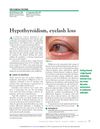
November 2020 in “Cleveland Clinic Journal of Medicine”
3 citations
,
November 2020 in “Cleveland Clinic Journal of Medicine” Eyelash loss can be a sign of thyroid problems.
 October 2023 in “Frontiers in medicine”
 Comprehensive screening for infections is crucial before starting JAK inhibitors in alopecia areata patients.