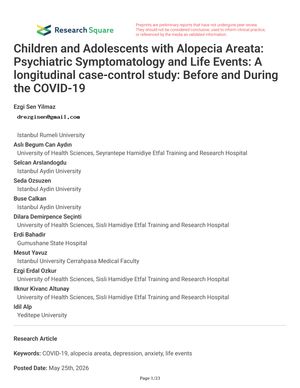
Children And Adolescents With Alopecia Areata: Psychiatric Symptomatology And Life Events: A Longitudinal Case-Control Study: Before And During The COVID-19
May 2026
in “
Research Square
”
TLDR Children with alopecia areata often face more stress and depression, especially related to separation, which can affect their condition.
This longitudinal case-control study involving 36 children and adolescents with alopecia areata (AA) and 60 healthy controls examined the psychological factors contributing to AA, focusing on stress-related events and psychiatric symptoms before and during the COVID-19 pandemic. The study found that children with AA experienced more stressful life events, particularly separation-related, before hair loss onset, and had higher levels of depression, emotional, peer problems, and ADHD symptoms. During the pandemic, anxiety and depressive symptoms increased significantly. The study suggests that specific psychological stressors, especially separation-related events, may be linked to the onset and course of AA, highlighting the importance of considering both psychological and dermatological dimensions in treatment strategies. Despite the pandemic's stress, some AA cases showed significant or complete hair regrowth, particularly those related to exam stress and conflicts with friends. The findings underscore the association between AA and depression, with AA patients at higher risk for depression, which can be both a predisposing and initiating factor for AA.