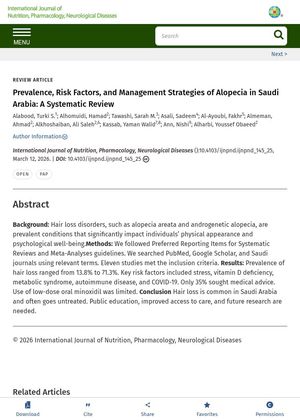
Prevalence, Risk Factors, And Management Strategies Of Alopecia In Saudi Arabia: A Systematic Review
March 2026
in “
International journal of Nutrition Pharmacology Neurological Diseases
”
TLDR Hair loss is common but often untreated in Saudi Arabia, needing more public awareness and better access to care.
This systematic review highlights that hair loss disorders, such as alopecia areata and androgenetic alopecia, are prevalent in Saudi Arabia, with a prevalence range of 13.8% to 71.3%. Key risk factors identified include stress, vitamin D deficiency, metabolic syndrome, autoimmune diseases, and COVID-19. Despite the significant impact on individuals' physical appearance and psychological well-being, only 35% of affected individuals seek medical advice, and the use of low-dose oral minoxidil is limited. The study concludes that there is a need for public education, improved access to care, and further research to address the high prevalence and often untreated nature of hair loss in the region.