Alopecias
April 2022
in “
Indexia revista médico - científica
”
TLDR Alopecia causes sudden hair loss, possibly due to genetic, environmental, or immune factors.
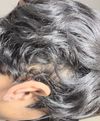
Alopecias were defined as the lack of growth of previously existing hair, leading to reduced hair density or total or partial hair loss. Alopecia areata was an autoimmune disease with unknown etiology, though some evidence suggested environmental, immunological, and genetic factors might have contributed to its onset. It was characterized by sudden, non-scarring hair loss on the scalp and/or body, with unpredictable and variable progression in patients. Typically, it presented as patches that left smooth alopecic areas, mainly on the scalp, but it could also progress to affect the entire scalp or other hair-bearing areas like eyebrows, eyelashes, and beard. When it affected all body hair, it was termed alopecia universalis.