Network Pharmacology and In Vivo Experimental Analysis for Validating the Antifibrotic Potential of Punica Granatum Leaves Against Skin Scleroderma: The Role of Oxidative Stress, Inflammation and TGF-β1/Snail 1/p-Smad 3 Signaling Pathway
April 2026
in “
Inflammopharmacology
”
TLDR Punica granatum leaf extract may help treat skin fibrosis by reducing inflammation and oxidative stress.
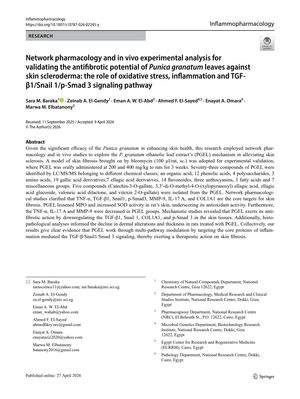
This study explores the antifibrotic potential of Punica granatum ethanolic leaf extract (PGEL) against skin scleroderma, focusing on oxidative stress, inflammation, and the TGF-β1/Snail 1/p-Smad 3 signaling pathway. In a rat model with 24 subjects, PGEL was administered at doses of 200 and 400 mg/kg, resulting in reduced oxidative stress and inflammation markers, such as IL-17 A, TNF-α, and MMP-9. PGEL also downregulated fibrotic markers like COL1A1 and Snail 1, and decreased TGF-β1 and p-Smad 3 levels, leading to improved dermal thickness and collagen fiber arrangement. The study suggests that PGEL, rich in compounds like ellagic acid and catechin-3-O-gallate, may offer therapeutic benefits for skin fibrosis by targeting inflammation, extracellular matrix production, and oxidative stress.