TLDR Autosomal recessive woolly hair is rare and involves tightly coiled hair without other health issues.
This study presents a series of eight cases of autosomal recessive woolly hair (ARWH) observed in an Indian population over the past 12 years. Woolly hair is characterized by tightly coiled scalp hair and can be associated with various systemic anomalies or occur in isolation as nonsyndromic. The focus here is on nonsyndromic ARWH, detailing the clinical presentation, hair characteristics, and treatment responses of the patients. The study highlights the rarity of the condition and provides insights into its manifestation in the Indian demographic.
5 citations
,
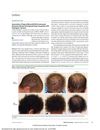
July 2020 in “JAMA Dermatology” Minoxidil solution applied twice daily improved hair growth in patients with Woolly Hair/Hypotrichosis due to LIPH gene issues, with mild side effects.
3 citations
,
February 2016 in “Dermatologic Therapy” Using minoxidil and tretinoin on the skin, along with oral vitamin D, improved hair thickness and density in two girls with woolly hair.
18 citations
,
January 2015 in “Journal of medical genetics” New genes linked to woolly hair have been found, which could help treat it and change hair texture.
46 citations
,
March 2013 in “Journal of Cosmetic and Laser Therapy” Non-ablative and ablative fractional lasers helped hair growth in some cases without major side effects, but didn't work for all hair disorders.
210 citations
,
February 2008 in “Nature genetics” Mutations in the P2RY5 gene cause autosomal recessive woolly hair.
194 citations
,
November 2006 in “Science” A genetic mutation in the LIPH gene causes hair loss and growth defects.
26 citations
,
December 2011 in “Journal of Investigative Dermatology” New gene identification techniques have improved the understanding and classification of inherited hair disorders.
2 citations
,
January 2013 in “Elsevier eBooks” The document explains the genetic causes and characteristics of inherited hair disorders.
89 citations
,
September 2010 in “Annual Review of Genomics and Human Genetics” The document concludes that understanding the genes and pathways involved in hair growth is crucial for developing treatments for hair diseases.
17 citations
,
November 2012 in “Journal of Investigative Dermatology” The document concludes that over 500 genes are linked to hair disorders and this knowledge is important for creating new treatments.
May 2025 in “Frontiers in Genetics” A new genetic variant in the LIPH gene causes hair growth issues in a Chinese patient.