The Cat With Alopecia
January 2006
in “
Elsevier eBooks
”
alopecia pruritic conditions allergies parasitic infections genetic predispositions hormonal imbalances nutritional deficiencies neoplastic conditions psychological stress hyperthyroidism endocrine disorder blood tests medication surgery radioactive iodine therapy pili torti telogen defluxion hyperadrenocorticism staphylococcal dermatitis dietary alopecia alopecia mucinosa alopecia areata hair loss itchy conditions thyroid disorder blood diagnostics radioactive iodine treatment Cushing's syndrome bacterial skin infection
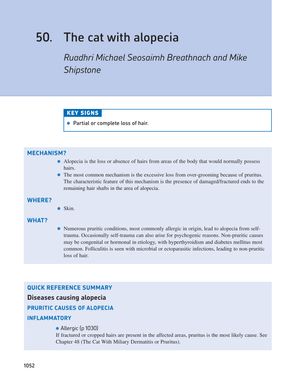
TLDR Cats lose fur due to various reasons, including allergies, infections, genetics, hormones, diet, cancer, stress, and some conditions are treatable while others are not.
The document from 2006 details various causes of alopecia in cats, including pruritic conditions like allergies and parasitic infections, non-pruritic causes such as genetic predispositions and hormonal imbalances, and other factors like nutritional deficiencies, neoplastic conditions, and psychological stress. It highlights hyperthyroidism as a common endocrine disorder causing alopecia, with symptoms like increased appetite, weight loss, and restlessness, and outlines diagnostic methods including blood tests and treatment options like medication, surgery, and radioactive iodine therapy. Other specific forms of alopecia discussed include pili torti, telogen defluxion, hyperadrenocorticism, staphylococcal dermatitis, dietary alopecia, alopecia mucinosa, and alopecia areata, each with their own signs, diagnostic challenges, and treatments, though many lack effective treatment options. The prognosis for cats with alopecia depends on the underlying cause, with some conditions being manageable or correctable, while others may lead to euthanasia or require long-term management.