Dormancy in the Stem Cell Niche

    March 2012 in “ Stem Cell Research & Therapy
    Roberta Sottocornola, Cristina Lo Celso
    Image of study
    TLDR Some stem cells in the body rarely divide, which could help create better treatments for diseases and aging.
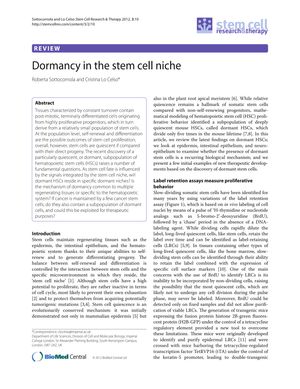
    The document from March 19, 2012, reviews the concept of dormancy in stem cell niches, particularly focusing on dormant hematopoietic stem cells (HSCs) that divide infrequently. It discusses the presence of dormant stem cells in various tissues, including the epidermis, intestinal epithelium, and neuroepithelium, and the implications for therapeutic developments. The review describes methods to identify slow-dividing stem cells and the potential for specific niches that maintain stem cell dormancy. It also explores the complexity within stem cell pools in different tissues and raises the possibility of dormant subpopulations within cancer stem cells (CSCs), suggesting that understanding the control of dormancy could lead to better therapies for diseases and aging. The document highlights the role of osteoblastic cells in the HSC niche, the identification of stem cells in the intestine, colon, and skin, and the dynamics of hair follicle stem cells. It concludes with the challenges in targeting tumor-initiating cells and the potential of in vivo imaging techniques for studying transplanted stem and progenitor cells.

    Discuss this study in the Community →

    Research cited in this study

    2 / 2 results

    Related Community Posts Join

    6 / 601 results

      community Story time! The Great Unbalding (PP405)

      in Research/Science  232 upvotes 3 months ago
      PP405 is a promising new hair loss treatment that may reactivate dormant hair follicles without side effects. It could surpass traditional treatments like minoxidil and finasteride if successful in further trials.

      community Hair theory Scar tissue and Verteporfin

      in Chat  24 upvotes 1 year ago
      A user suggests that deeper microneedling with Verteporfin injections might help regrow hair in areas with scar tissue, alongside a DHT blocker. Another user explains that hair loss might be due to reduced Wnt/β-Catenin signaling and suggests that treatments like Minoxidil, Finasteride, and microneedling could potentially reverse it.

      community A Theory on Why Microneedling Works

       172 upvotes 6 years ago
      Microneedling may enhance hair regrowth by transferring stem cells to dormant follicles, improving the effects of minoxidil. Users discuss using microneedling with needle lengths around 1.5mm to stimulate hair growth.

      community The Real Reason For Hair Loss?

      in Research/Science 1 month ago
      Hair loss is linked to scalp fibrosis and tension, which result from chronic mechanical stress and androgenic signaling. Treatments include blocking androgens with finasteride, promoting hair growth with topical minoxidil, and improving scalp mobility through exercises.

    Related Research

    1 / 1 results