Drug-Associated Insomnia: A Pharmacovigilance Study Based on FDA Adverse Event Reporting System
April 2026
in “
Medicine
”
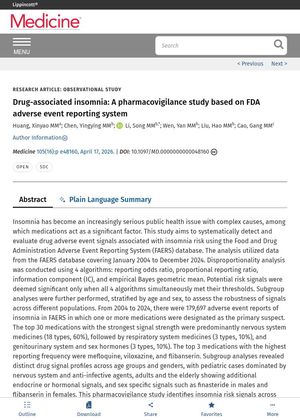
TLDR Certain medications, especially nervous system drugs, can cause insomnia, with risks varying by age and gender.
This pharmacovigilance study analyzed 179,697 adverse event reports from the FDA's FAERS database to identify drugs associated with insomnia, finding an increase in insomnia-related events from 2004 to 2024. The study identified 30 drugs frequently linked to insomnia, with varenicline, thyroxine, and duloxetine being the most reported. Central nervous system agents, including antidepressants, stimulants, and antipsychotics, were primary contributors to insomnia risk signals. The study highlighted the need for clinical monitoring and further research, noting that insomnia is a common adverse effect across various therapeutic domains. Despite limitations like underreporting, the findings underscore the importance of vigilance in managing insomnia risk, especially for medications affecting the central nervous system.