TLDR Autologous cell-based therapies, especially SVF, effectively and safely improve atrophic acne scars.
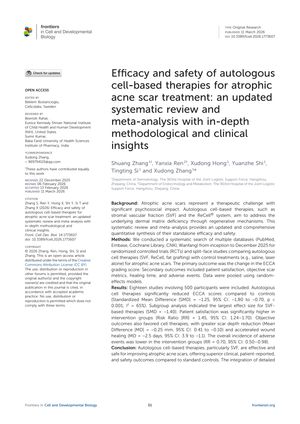
This systematic review and meta-analysis evaluated the efficacy and safety of autologous cell-based therapies, such as stromal vascular fraction (SVF) and the ReCell® system, for treating atrophic acne scars. Analyzing 18 studies with 500 participants, the research found that these therapies significantly improved ECCA scores, patient satisfaction, scar depth reduction, and wound healing compared to control treatments. SVF-based therapies showed the largest effect size. Additionally, the incidence of adverse events was lower in the intervention groups. The findings support the effectiveness and safety of autologous cell-based therapies, particularly SVF, in treating atrophic acne scars, and provide insights for optimizing clinical protocols and future research.

Transplanting cultured skin sheets improved acne scars in four patients.
July 2024 in “Periodontology 2000” Autologous platelet concentrates show promise in esthetic treatments but need more standardized research.
June 2024 in “Stem cell research & therapy” Regenerative medicine shows promise for treating skin disorders like hair loss and vitiligo.
8 citations
,
June 2023 in “Journal of clinical medicine” Nanofat shows promise for facial rejuvenation and treating skin issues but needs more research for long-term safety.
7 citations
,
March 2018 in “Experimental Dermatology” Acne lesions don't show increased keratinocyte growth compared to healthy hair follicles.
17 citations
,
August 2015 in “The international journal of lower extremity wounds/International journal of lower extremity wounds” Effective wound healing after HS treatments can be achieved with various methods like moist dressings and skin grafting.
113 citations
,
July 2015 in “Journal of Cosmetic Dermatology” Platelet-rich plasma may help with hair growth and skin quality but more research is needed to confirm its effectiveness.
January 2022 in “Stem cell biology and regenerative medicine” Stem cell therapies show promise for hair regrowth but need more research to confirm effectiveness.
November 2023 in “Linköping University medical dissertations” Keratinocytes and adipose-derived stem cells can effectively heal difficult skin wounds.
6 citations
,
March 2021 in “Cytotechnology” Mesenchymal stem cells show promise in treating COVID-19 by reducing inflammation and aiding recovery, but more research is needed.
133 citations
,
July 2020 in “Cells” Creating fully functional artificial skin for chronic wounds is still very challenging.
Stem cell therapy shows promise for better burn healing but needs more research and standardization.