TLDR Emulgels effectively deliver hydrophobic drugs for skin conditions like acne and psoriasis.
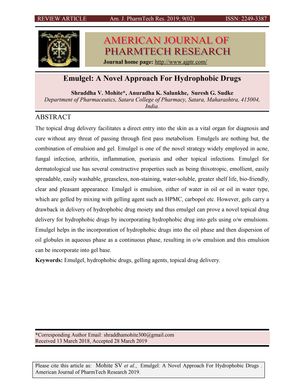
Emulgel was a novel approach for delivering hydrophobic drugs topically, combining the properties of emulsions and gels. It was particularly useful for conditions like acne, fungal infections, arthritis, inflammation, and psoriasis. Emulgels offered advantages such as being thixotropic, emollient, easily spreadable, washable, greaseless, non-staining, water-soluble, and bio-friendly. They addressed the challenge of delivering hydrophobic drugs by incorporating them into the oil phase of an oil-in-water emulsion, which was then mixed with a gel base, enhancing the drug's stability and effectiveness for dermatological applications.

13 citations
,
April 2019 in “American Journal of PharmTech Research” Emulgels effectively deliver hydrophobic drugs for skin conditions like acne and psoriasis.
January 2000 in “Time to knit” Emulgels are promising for delivering drugs topically due to their easy spreadability and stability.
June 2023 in “International Journal for Research in Applied Science and Engineering Technology” Emulgel improves skin delivery of various drugs better than traditional methods.
5 citations
,
January 2022 in “Asian Journal of Pharmaceutical and Clinical Research” Emulgels are effective for delivering skin medications and cosmetics due to their easy application and controlled release.
1 citations
,
December 2023 in “Annals of Phytomedicine An International Journal” Nanoemulgel improves delivery and effectiveness of plant-based drugs for various conditions.
3 citations
,
January 2023 in “Journal of Pharmaceutical Negative Results” The emulgel with 11.5% oil and 1.75% gelling agent effectively delivers fluconazole topically with improved spreadability and stability.