Worldwide Clinical and Real-World Exposure to Baricitinib
November 2024
in “
SKIN The Journal of Cutaneous Medicine
”
TLDR Baricitinib is widely used for several conditions, especially COVID-19, but its safety and effectiveness are still being evaluated.
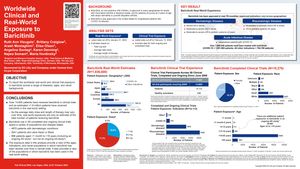
Baricitinib (BARI), a JAK inhibitor, has been extensively used worldwide for conditions like rheumatoid arthritis, alopecia areata, atopic dermatitis, juvenile idiopathic arthritis, and COVID-19. An estimated 1,836,600 patients have been exposed to BARI in real-world settings, with 57% for COVID-19 treatment. Clinical trials have involved 14,660 subjects, including 866 patients under 18 years. The trials cover diverse racial backgrounds and age groups, from less than 1 month to over 65 years. While these exposures don't confirm efficacy or safety, they help establish BARI's overall profile and inform its performance across various populations.