Patient-Reported Hair Loss and Its Impacts as Measured by the Alopecia Areata Patient Priority Outcomes Instrument in Patients Treated with Ritlecitinib: The Allegro Phase 2b/3 Randomized Clinical Trial
October 2024
in “
American Journal of Clinical Dermatology
”
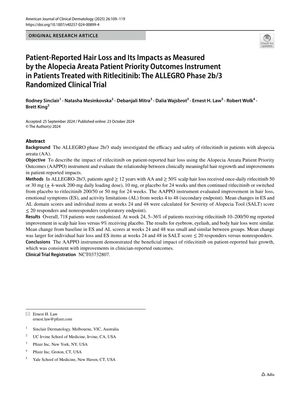
TLDR Ritlecitinib improved hair regrowth and emotional well-being in some alopecia areata patients.
The ALLEGRO Phase 2b/3 clinical trial assessed the efficacy of ritlecitinib in 718 patients with alopecia areata, using the Alopecia Areata Patient Priority Outcomes (AAPPO) instrument. Results indicated that 5-36% of patients treated with ritlecitinib reported improvements in scalp hair loss at week 24, compared to 9% in the placebo group. Significant hair regrowth was associated with better emotional outcomes and reduced activity limitations, particularly in patients with a SALT score ≤ 20. The study supports the use of SALT score 20 as a meaningful endpoint for treatment efficacy, though it notes limitations in participant diversity and the exclusion of certain patient groups.