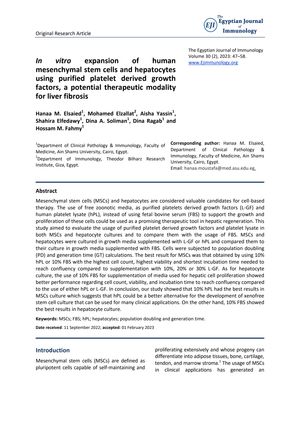
TLDR 10% hPL is best for growing mesenchymal stem cells, while 10% FBS is best for hepatocytes.
This study evaluated the use of purified platelet-derived growth factors (L-GF) and human platelet lysate (hPL) as alternatives to fetal bovine serum (FBS) for culturing mesenchymal stem cells (MSCs) and hepatocytes. The results indicated that 10% hPL was most effective for MSCs, providing the highest cell count, viability, and shortest time to confluency, suggesting its potential as a xenofree culture medium for clinical applications. Conversely, 10% FBS was superior for hepatocyte culture, achieving better cell count, viability, and faster confluency compared to hPL and L-GF.

February 2021 in “Dermatologic Therapy” Injections improve hair growth, density, and thickness in women safely.
51 citations
,
March 2019 in “Journal of cellular physiology” Platelet lysate is a promising, cost-effective option for regenerative medicine with potential clinical applications.
January 2024 in “International Journal of Trichology” Human platelet-rich plasma is better than fetal bovine serum for growing cells that help hair regrow.
29 citations
,
December 2019 in “Transfusion and Apheresis Science” Platelet-derived bio-products help in wound healing and tissue regeneration but lack standardized methods, and their use in medicine is growing.
12 citations
,
September 2020 in “Nanomaterials” The new drug delivery system improves vitiligo treatment by enhancing melanocyte activity and viability.
14 citations
,
May 2022 in “International Journal of Molecular Sciences” Platelet-rich plasma improves bladder function and reduces overactivity in ketamine-induced bladder issues.
11 citations
,
August 2018 in “Facial Plastic Surgery Clinics of North America” Adipose-derived stem cells show potential for skin rejuvenation and wound healing but require more research to overcome challenges and ensure safety.