Inhibiting the Cytosolic Function of CXXC5 Accelerates Diabetic Wound Healing by Enhancing Angiogenesis and Skin Repair
August 2023
in “
Experimental & Molecular Medicine
”
TLDR Blocking CXXC5 speeds up diabetic wound healing by improving blood vessel growth and skin repair.
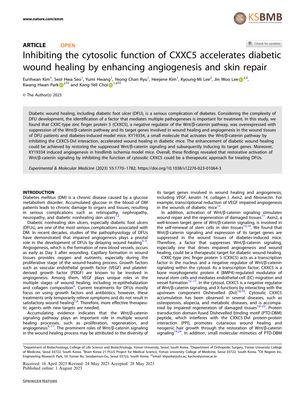
The study investigates the role of CXXC-type zinc finger protein 5 (CXXC5) in diabetic wound healing, particularly in diabetic foot ulcers (DFUs). CXXC5 is identified as a negative regulator of the Wnt/β-catenin pathway, which is crucial for wound healing and angiogenesis. The research found that CXXC5 is overexpressed in DFU patients and diabetes-induced model mice, leading to suppression of the Wnt/β-catenin pathway. The study introduces KY19334, a small molecule that inhibits the CXXC5-Dvl interaction, thereby activating the Wnt/β-catenin pathway. This activation accelerates wound healing in diabetic mice and induces angiogenesis in hindlimb ischemia model mice. The findings suggest that targeting CXXC5 to restore Wnt/β-catenin signaling could be a promising therapeutic strategy for DFUs.