Treatment of Invasive Aspergillosis with Itraconazole

    David W. Denning, Richard Tucker, Linda H. Hansen, David A. Stevens
    Image of study
    TLDR Itraconazole is potentially effective for treating invasive aspergillosis, but more research is needed.
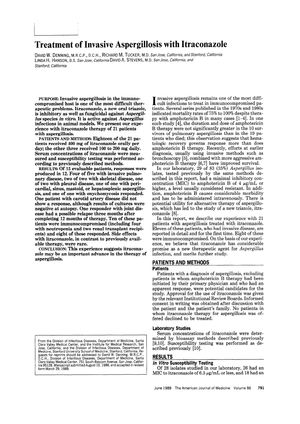
    In 1989, a study evaluated itraconazole, a new oral triazole antifungal medication, for treating invasive aspergillosis in 21 patients. The study found that of the 15 evaluable patients, 12 responded to the treatment with itraconazole doses ranging from 100 to 400 mg per day. This response was observed across various forms of aspergillosis and in both immunocompetent and immunocompromised patients, including those with neutropenia and organ transplants. While the document reported rare side effects, one patient experienced hair loss attributed to telogen effluvium. The document concluded that itraconazole could be fungicidal at achievable serum concentrations for most isolates and may be superior to other agents in certain cases, but it also highlighted the need for further research due to the variability in drug susceptibility and serum concentrations. Despite some patients not surviving, itraconazole was suggested as a potential important advance in aspergillosis therapy, with calls for more extensive studies to fully assess its efficacy.

    Discuss this study in the Community →

    Related Community Posts Join

    6 / 694 results

      community Telogen Effluvium/Chronic TE and immune-related hair loss advice

       4 upvotes 7 years ago
      Chronic Telogen Effluvium can be managed by avoiding inflammatory foods, exercising, staying hydrated, and using supplements like krill oil, saw palmetto, or licorice root. Minoxidil is discouraged due to its cost and potential for worsening hair loss, while castor oil is recommended to strengthen hair roots and reduce shedding.

      community My Telogen Effluvium journey after a bad Keratin Treatment

      in Female  6 upvotes 2 years ago
      A user shared their experience with telogen effluvium triggered by a keratin treatment, leading to significant hair loss. They found improvement using aloe vera with rosemary, a protein and iron-rich diet, and patience.

      community Been diagnosed with telogen effluvium and MPB

      in Chat  3 upvotes 5 months ago
      A 21-year-old male diagnosed with telogen effluvium and male pattern baldness started oral finasteride, which initially slowed hair loss and slightly thickened hair, but experienced increased shedding after surgery. The doctor recommended iron and vitamin D supplements, and the user is seeking additional advice.

      community Is 2years+ telogen effluvium possible?

      in Finasteride/Dutasteride  2 upvotes 1 year ago
      The user has been losing hair for over two years despite taking dutasteride and RU58841, even increasing dutasteride to 2.5mg. They are questioning if their hair loss could be due to telogen effluvium instead.

    Related Research

    1 / 1 results