Non-Invasive Diagnosis of Prostate Cancer from Body Fluids Using a Panel of Tumor Suppressor Genes
March 2011
in “
European Urology Supplements
”
TLDR Blood tests for tumor cells could improve prostate cancer diagnosis and treatment; hair loss severity linked to a gene affecting prostate conditions.
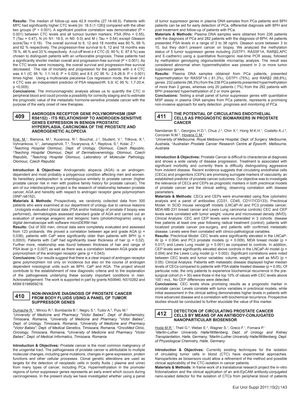
The document presents findings from two separate studies related to prostate cancer and androgenetic alopecia (AGA). The first study focused on the non-invasive diagnosis of prostate cancer through the analysis of circulating tumor cells (CTCs) in peripheral blood. It found that patients with metastatic prostate cancer had significantly higher levels of CTCs and that a CTC level of ≥4 was associated with a worse prognosis, including shorter overall and progression-free survival. The study concluded that immunomagnetic analysis of CTCs could help in staging metastatic hormone-sensitive prostate cancer and in the early initiation of new therapies.
The second study investigated the relationship between AGA, prostate cancer, and heredity, particularly focusing on androgen receptor gene polymorphism (SNP rs6152). Data from 300 patients were collected, and a correlation was found between AGA grade and the polymorphism of the androgen receptor gene. The study concluded that androgen receptor gene polymorphism impacts the incidence and course of androgen-dependent conditions such as BPH, CaP, and AGA, and could help establish new diagnostic criteria and explain the pathogenesis of these conditions.
The document also mentions a third study on the potential of circulating endothelial cells as prognostic biomarkers in prostate cancer, and a fourth study on the detection of circulating prostate cancer cells using an antibody-conjugated nanoparticulate biosensor. However, the concise summary requested only covers the first two studies.