TLDR New mutations in the VDR gene cause vitamin D-resistant rickets without hair loss.
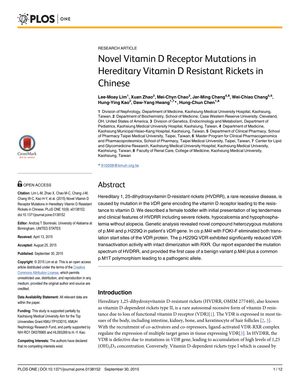
The study described a case of a female toddler with hereditary 1,25-dihydroxyvitamin D-resistant rickets (HVDRR), characterized by severe rickets, hypocalcemia, and hypophosphatemia, but notably without alopecia. Genetic analysis identified novel compound heterozygous mutations in the VDR gene: p.M4I and p.H229Q. The p.M4I mutation, in combination with FOKI-F, eliminated both translation start sites of the VDR protein, while the p.H229Q mutation resulted in significantly reduced VDR transactivation activity despite normal dimerization with RXR. This report expanded the known mutation spectrum of HVDRR and highlighted the first case where a benign variant p.M4I, along with a common p.M1T polymorphism, contributed to a pathogenic allele.
107 citations
,
March 2014 in “BoneKEy Reports” Mutations in the vitamin D receptor cause hereditary vitamin D-resistant rickets, leading to poor bone health and requiring high calcium doses for treatment.
50 citations
,
October 2011 in “Archives of Biochemistry and Biophysics” Vitamin D receptor is essential for healthy hair growth.
37 citations
,
August 2011 in “Journal of Bone and Mineral Research” A girl had rickets due to a gene mutation affecting vitamin D response.
109 citations
,
June 2011 in “Molecular and Cellular Endocrinology” Vitamin D receptor mutations can cause alopecia by affecting hair growth genes.
151 citations
,
June 2010 in “Endocrinology and metabolism clinics of North America” Two rare genetic diseases cause severe rickets in children due to defects in vitamin D metabolism.
36 citations
,
January 2010 in “Journal of Pediatric Endocrinology and Metabolism” A new gene mutation causes vitamin D resistance and hair loss in two unrelated girls.
50 citations
,
September 2009 in “Molecular Genetics and Metabolism” A new gene mutation causes vitamin D resistance and rickets, treatable with calcium therapy.