TLDR Patients with the same vitamin D receptor mutation showed different symptoms due to other factors.
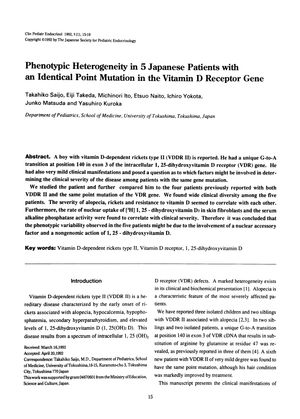
The study examined 5 Japanese patients with vitamin D-dependent rickets type II (VDDR II) who shared an identical point mutation in the vitamin D receptor (VDR) gene. Despite having the same genetic mutation, the patients exhibited significant phenotypic heterogeneity, particularly in the severity of alopecia, rickets, and vitamin D resistance. The study found that the clinical severity correlated with the rate of nuclear uptake of [3H] 1, 25-dihydroxyvitamin D3 in skin fibroblasts and serum alkaline phosphatase activity. The researchers concluded that the variability in clinical manifestations might be due to a nuclear accessory factor and a nongenomic action of 1, 25-dihydroxyvitamin D.

47 citations
,
October 1989 in “European Journal of Pediatrics” Two siblings stayed rickets-free for 14 years after stopping treatment.
110 citations
,
November 1984 in “The American Journal of Medicine” A genetic defect in vitamin D receptors causes severe rickets and hair loss in children, but some heal as they age.
88 citations
,
October 1983 in “The Journal of clinical endocrinology and metabolism/Journal of clinical endocrinology & metabolism” Patients with this syndrome can have different responses and worsening resistance to treatment over time.
23 citations
,
October 2009 in “Gastroenterology” Vitamin D is crucial for bone health and preventing serious diseases.
1308 citations
,
March 1998 in “Journal of bone and mineral research” The vitamin D receptor is crucial for bone health and affects various body systems, with mutations potentially leading to disease.
8 citations
,
March 2011 in “Endocrine” A new gene mutation causes vitamin D-resistant rickets and hair loss in two siblings.
81 citations
,
January 2006 in “Journal of cellular physiology” Mice without the vitamin D receptor gene lose hair due to disrupted hair follicle cycles.
30 citations
,
October 2009 in “Journal of Veterinary Internal Medicine” A Pomeranian dog had rickets due to a new gene mutation, leading to severe symptoms and euthanasia.
78 citations
,
November 2005 in “Endocrinology” Hairless protein can block vitamin D activation in skin cells.