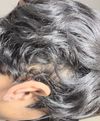
This study examined nail involvement in 91 children with treatment-resistant alopecia areata (AA), aged 3.5–14 years. It found that 69.2% of these children had nail involvement, with pitting being the most common feature (74.6%). Nail involvement was significantly associated with longer disease duration (p=0.049) but not with the severity of scalp hair loss (p>0.05). Additionally, children without a family history of AA experienced more severe disease and a higher incidence of alopecia totalis or universalis (p<0.05). The findings suggest that nail-matrix autoimmune activity may progress independently of scalp severity in refractory pediatric AA cases.
July 2026 in “Skin Appendage Disorders” The study reviewed records of 91 children with treatment-resistant alopecia areata (AA) and found that 69.2% had nail involvement, with pitting being the most common finding. Nail involvement was significantly associated with longer disease duration but not with disease severity. Children without a family history of AA had more severe disease. The findings suggest that nail-matrix autoimmune activity may follow a partially independent course from scalp severity in refractory pediatric AA.
 March 2026 in “Scholars Journal of Medical Case Reports”
 Nail issues are common in kids with alopecia areata and should be checked for better diagnosis.
6 citations
,
April 2024 in “Health Science Reports” Younger patients with severe alopecia areata often have nail problems.
 January 2025 in “International Journal of Dermatology Sciences”
 Nail changes in alopecia areata are common and may indicate severity and genetic risk.