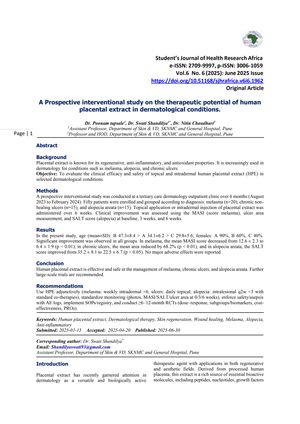
TLDR Human placental extract effectively and safely improves melasma, ulcers, and alopecia areata.
A prospective interventional study evaluated the efficacy and safety of human placental extract (HPE) in treating melasma, chronic non-healing ulcers, and alopecia areata in 50 patients over 6 weeks. Significant improvements were observed: the mean MASI score for melasma decreased from 12.6 to 6.4, ulcer areas reduced by 68.2%, and the SALT score for alopecia areata improved from 35.2 to 22.5. No major adverse effects were reported. The study concludes that HPE is effective and safe for these conditions, recommending further large-scale trials and specific treatment protocols for optimal results.

August 2024 in “Aesthetic Plastic Surgery” Exosome treatment safely increases hair density in male patients with androgenetic alopecia.
10 citations
,
May 2015 in “International Journal of Women's Dermatology” New treatments for skin and hair disorders in women of color address unique biological differences and include specific acne medications, sunscreens, skin lighteners, and hair care adjustments.
55 citations
,
April 2015 in “BMC medicine” Stem Cell Educator therapy helps regrow hair and improve life quality in alopecia areata patients.
August 2025 in “Aesthetic Plastic Surgery” Collaboration and innovation are key to developing effective, safe hair loss treatments.
5 citations
,
December 2011 in “InTech eBooks” Eat antioxidant-rich foods, reduce fast food, and explore various treatments for vitiligo.
3 citations
,
August 2020 in “PubMed” Platelet-rich plasma (PRP) is effective in treating various skin conditions and improving hair density, thickness, and patient satisfaction, with lower relapse rates for Alopecia Areata.
Regenerative cosmetics can improve skin and hair by reducing wrinkles, healing wounds, and promoting hair growth.
October 2025 in “Journal of Advanced Trends in Medical Research” Exosomes and PRP both show promise for hair loss treatment, but more research is needed.