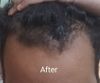
A 17-year-old has been using Minoxidil for 3 months and dermastap for 2 weeks but feels they are losing progress. A suggestion was made to add finasteride 1 mg three times weekly.
User reports 3-month progress using daily 1mg finasteride, 0.5ml minoxidil (2x daily), 0.5ml dutasteride, and derma rolling 0.5mm 1-2 times per week. They see increased density on crown and top of head, slight progress in corners and temples, and recently added cosmerna.
There is no reliable ranking for the effectiveness of topical anti-androgens like Fluridil, RU58841, and Pyrilutamide, with limited studies available. Some users suggest Pyrilutamide may be promising based on ongoing trials, while Fluridil combined with finasteride has shown positive results for some individuals.
A user started using topical finasteride 0.1% with Aloe Vera 0.05% on May 19, 2023, to address hair loss that began at age 27. They plan to post progress pictures every three months.
PP405 is a new hair loss treatment advancing quickly in trials, generating excitement and skepticism about its effectiveness and marketing claims. Some see it as a potential alternative to minoxidil and finasteride, but concerns about long-term effects and the need for DHT blockers persist.
A 22-year-old male with high estrogen levels is considering finasteride for hair loss but is concerned about potential side effects due to his hormone levels and family history of diabetes. Users suggest consulting a doctor, possibly an endocrinologist, and considering lifestyle changes like diet and exercise to address visceral fat and insulin resistance before starting treatment.
The conversation discusses the completion of a Phase II trial recruitment for Breezula (CB-03-01), a potential treatment for androgenic alopecia. Specific treatments mentioned include Minoxidil, Finasteride, and RU58841.
The user is considering adding a topical treatment to their current regimen of finasteride and oral minoxidil to protect their temple area, with options like piro, RU58841, or topical finasteride or dutasteride. They are advised against overcomplicating their treatment, but another user suggests a topical with 8% minoxidil/dutasteride for better results.
Clascoterone 5% topical solution shows promise for treating male-pattern hair loss by blocking DHT at the follicle without systemic absorption, potentially offering fewer side effects than oral treatments like finasteride. While results are promising, long-term safety and effectiveness need further study, and it may serve as a starting point for developing more effective treatments.
A 16-year-old has been using microneedling, rosemary oil, coconut oil and egg mask, Nizoral shampoo, saw palmetto, and supplements for hair loss and is asking if there's progress. It's suggested to replace some oils with minoxidil, continue saw palmetto, and possibly start finasteride at 18.
Delayed release oral minoxidil is seen as a promising advancement for hair loss treatment, offering safer, higher doses and more consistent hair follicle stimulation compared to current options. However, it is not expected to replace finasteride or dutasteride, as it does not prevent androgenetic alopecia.
Spironolactone, finasteride, and dutasteride are discussed for hair maintenance, with concerns about testosterone and side effects like gynecomastia. Spironolactone is noted for use in both bodybuilding and hormone therapy, with low doses considered for minimizing side effects.
RU58841, combined with 5% minoxidil, helped reduce acne and hair loss. Users discussed using RU58841 cream for acne and shared experiences with other treatments like finasteride and dutasteride.
A 49-year-old is using finasteride, minoxidil, tretinoin, and ketoconazole shampoo to combat advanced hair loss and hopes for enough regrowth to consider a hair transplant. Progress is slow, but some improvement is noted by others.
A new hair loss treatment, PP405, is moving from phase 2A to 2B in clinical trials, sparking discussions about its potential to regrow dormant hairs and its impact on existing treatments like Minoxidil and finasteride. Some users express skepticism, while others are hopeful about its future effectiveness.
The user has been using oral finasteride for 15 months and oral minoxidil for 6 months, and developed alopecia areata, for which a dermatologist prescribed calcipotriol/betamethasone. The treatment is helping, but the user is experiencing another shedding phase and is concerned about the effects of the steroid cream and the cause of hair loss.
A user discusses using topical dutasteride 0.025% once a week for hair maintenance, alongside fortified minoxidil, RU58841, and Reviv Hair Serum. They seek feedback on the effectiveness of this regimen.
BPC-157 may promote hair growth by increasing angiogenesis, similar to how Minoxidil works, though no direct research confirms this yet. Users report combining BPC-157 with Minoxidil and finasteride for better results, but concerns about long-term safety exist.
User explores no-finasteride hair loss treatments, considering compounds like Minoxidil, Eucapil, Alfatradiol, Stemoxydeine, Azelaic Acid, Retinol, and Ketoconazole Shampoo. They ask about mixing compounds, application schedules, and potential side effects.
Alfatradiol is discussed as a weak 5ARI and estrogen, not as effective as minoxidil, RU58841, or CB-03-01, but a safe alternative for those who can't use finasteride. Users express frustration over the lack of strong FDA-approved topical antiandrogens for hair loss.
A user reports significant hair shedding and regrowth after increasing their dutasteride dosage to 5mg, alongside using RU58841, minoxidil, and topical finasteride, with no side effects. They recommend high doses of dutasteride, sourced from China, despite concerns about its safety.
Dutasteride raises scalp testosterone by 99%, which may not be ideal for those sensitive to all androgens. Some argue finasteride's balancing act might be better, while others believe dutasteride is superior for hair regrowth.
The conversation discusses using hormones like pregnenolone and tongkat ali to counteract sexual side effects from hair loss medications such as finasteride, dutasteride, ketoconazole, and minoxidil. The user stopped the other medications but continues using minoxidil while seeking advice on maintaining libido.
Switching from propylene glycol to glycerin in topical finasteride may reduce systemic absorption and side effects while maintaining local scalp DHT suppression. Concerns exist about glycerin's ability to deliver the full dose to hair follicles.
The user is concerned about high LH and estradiol levels after using finasteride but reports no side effects. They are seeking advice on whether these levels are concerning despite feeling fine.
An 18-year-old is using a high-dose hair loss treatment regimen including finasteride, minoxidil, dutasteride, and plans to add RU58841 and bimatoprost, despite warnings from others about the risks. The user is determined to reverse hair loss but acknowledges the potential dangers and does not recommend others follow their approach.
Topical finasteride with hydroxypropyl chitosan shows significantly less serum absorption and minimal DHT reduction compared to oral finasteride. Users need the specific chitosan formulation to avoid side effects seen with regular ethanol+PG solutions.
User considers adding Alfatradiol to their topical finasteride treatment for hair loss. Others discuss Alfatradiol as a weak estrogen and 5α-reductase inhibitor used for pattern hair loss in men and women.
Creating a topical solution combining finasteride and stemoxydine to treat hair loss, and the discussion of whether 15mg of finasteride would be sufficient for 60ml solvent.