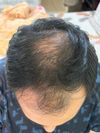
The user is considering blood tests to understand their receding hairline and is exploring brewer's yeast for its biotin content. They have been using topical Minoxidil, biotin, collagen, and microneedling, but are avoiding oral Finasteride and Dutasteride.
The conversation is about the potential of the RCH-01/Replicel hair loss treatment and its lack of updates since 2013, with the user expressing hope for its success and considering using Minoxidil, finasteride, and dermarolling in the meantime. Other treatments mentioned as promising are Breezula and Tsuji.
A 27-year-old male is using a hair loss treatment regimen including topical minoxidil, oral finasteride, dermarolling, ketoconazole shampoo, and mesotherapy with dutasteride and vitamins. He is considering switching to oral dutasteride as recommended by his doctor and questions the necessity and cost of mesotherapy.
The post discusses the rarity of baldness among South Korean men. Users suggest this could be due to early treatment, high beauty standards, accessibility of healthcare, and genetics. Treatments like finasteride and dutasteride are commonly used, and hair transplants are also popular.
Bryan Johnson used a customized hair restoration formula from Roots byGA, which includes Minoxidil, Cetirizine HCl, Latanoprost, Dutasteride, Melatonin, Caffeine, Tretinoin, Vitamin D3, and Vitamin E. Many users are skeptical of the effectiveness and uniqueness of the treatment, suggesting that standard treatments like Minoxidil and Dutasteride are more reliable.
The conversation discusses various hair loss treatments, including minoxidil, finasteride, latanoprost, tretinoin, dutasteride, and cetirizine, with concerns about effectiveness, cost, and potential side effects. Users express skepticism about the product's price and the combination of multiple compounds.
The conversation is about a user considering the use of Ketoconazole 2% shampoo before showing signs of male pattern baldness (MPB) to potentially delay its onset, inspired by a YouTuber who uses the shampoo to reduce scalp DHT levels. The user's interest in this preventative measure stems from a family history of MPB.
The conversation discusses using brewer's yeast for hair regrowth, either as a supplement or in a scalp masque. The user is considering adding it to their regimen.
A user shared their hair regrowth progress after using minoxidil 5% twice daily since January 31 and adding oral dutasteride 0.5mg and minoxidil 2mg daily two weeks ago. They also used microneedling occasionally and are seeking opinions on potential further gains.
Hair loss treatments like Dutasteride, RU58841, Finasteride, and Minoxidil are discussed, with skepticism about their effectiveness without photographic evidence. The conversation humorously critiques the reliance on anecdotal evidence for these treatments.
A 42-year-old male has been using finasteride successfully for over 10 years but is now experiencing thinning at the crown. He is considering adding minoxidil or switching to dutasteride for better results.
Cassiopea claimed that their hair loss treatment, Clascoterone, shows comparable results to finasteride after six months of use. Some users believe Clascoterone could be an additional treatment option for those who do not respond to finasteride.
The user is frustrated with hair loss treatments like finasteride, minoxidil, dutasteride, and oral minoxidil, which have been ineffective and caused scalp itching. They are skeptical about these treatments' effectiveness and consider alternative options like ketoconazole shampoo and RU58841.
A user is considering hair loss treatments like caffeine shampoo, rosemary oil, pumpkin seed supplements, and microneedling, but is unsure if these are effective compared to finasteride. Another user suggests trying finasteride or dutasteride, sharing regret for not starting earlier.
Using a blunt tip syringe is an effective method for applying liquid topicals like minoxidil and RU58841, especially for those with thick or long hair experiencing diffuse thinning. The user found significant hair regrowth and increased density after using these topicals for less than three months.
TDM-105795 showed better efficacy and safety in trials for hair loss, with a higher hair count improvement compared to GT20029 and HMI 115, but it's not as widely discussed. The user is questioning why this is the case.
The user is experiencing increased hair shedding after using oral minoxidil and is considering topical dutasteride but is concerned about potential worsening. They are also exploring other topical treatments like latanoprost, caffeine, and melatonin, and seeking advice on application methods without pulling out existing hair.
A 31-year-old Indian male has been using oral minoxidil and finasteride for hair loss without visible improvement. He is considering taking DUT tablets against his doctor's advice due to potential side effects and is contemplating buzzing his hair instead.
The user is considering switching from finasteride and oral minoxidil to dutasteride and a higher dose of oral minoxidil, taken intermittently, based on their dermatologist's advice. They are unsure about claims that finasteride loses effectiveness after a year and that minoxidil doesn't need daily dosing, and they are seeking community input on these points.
The conversation discusses various methods for applying topical minoxidil to the scalp, including using fingers, a shoe polish bottle, a dropper, a toothbrush, a q-tip, a makeup brush, and a syringe. Users emphasize the importance of massaging the product into the scalp for better absorption.
The conversation is about testing the effectiveness of RU58841 for hair loss, with the user planning to increase their dose to 30 mg per day along with 20 mg of Minoxidil. The test results showed approximately 70 mg/ml, which the user considers a good result.
Different treatments for hair loss, such as Finasteride, Minoxidil, Nizoral, Pumpkin Seed Oil, Saw Palmetto and PRP; the risks of using certain treatments; taking a break from this subreddit to cope with anxiety about hairloss; and potential benefits of maintaining confidence despite hairloss.
A 21-year-old is using oral minoxidil, rosemary oil, saw palmetto, and pumpkin seed oil for hair regrowth but is advised to use finasteride or dutasteride for better results. The user is hesitant to use DHT blockers due to cost and is seeking advice on whether their current regimen is effective.
The conversation discusses hair loss treatments using oral minoxidil, oral dutasteride, and mesotherapy dutasteride, showing impressive 6-month results. The user wishes these treatments were available in the U.S.
The user is using dutasteride, finasteride, and RU58841 for hair loss but is allergic to minoxidil. Suggestions include dropping finasteride, increasing dutasteride dosage, and considering alternatives like microneedling, laser treatments, scalp massage, and supplements.
The user experiences histamine intolerance with alcohol-based hair loss treatments like Rogaine foam and seeks alternatives. Suggestions include alcohol-free and PPG-free topical minoxidil or finasteride, and trying Spectral products with different solvents.
The conversation discusses using 2.5mg dutasteride, 0.5mg dutasteride with topical treatments, and other combinations like oral minoxidil, RU58841, and microneedling for male pattern baldness. Users share experiences and suggest various treatment regimens, emphasizing the effectiveness of dutasteride and minoxidil.
Hair loss treatments include finasteride, minoxidil, microneedling, dutasteride, CB-03-01, RU-58841, and experimental options like KY-19382 and stem cell therapy. Some treatments are considered ineffective or risky, such as ketoconazole, PRP, and low-level laser therapy.