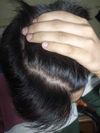
Trying out a new exosome treatment for male pattern baldness, in addition to increasing vitamin intake and using existing treatments such as Nizoral and scalp drops. The user has no expectations that the new treatment will work but is giving it a try anyway.
The conversation discusses hair loss treatment options, focusing on finasteride and its potential effects on gynecomastia. The user is considering finasteride while managing hormone levels with supplements like boron, vitamin D, zinc, magnesium, and P5P, and is advised to consult an endocrinologist for further evaluation.
People are discussing the use of the peptide GHK-Cu for hair and skin, with mixed results. Some users have tried it alongside other treatments like adenosine and melatonin, but have not seen significant improvements, and one user stopped due to cost.
A user is making their own dutasteride solution using MCT oil but is concerned about its effectiveness and bioavailability. They are considering using propylene glycol or adding ethanol for better results, while others suggest the current dosage might be excessive.
Treatments for hair loss, such as topical minoxidil, platelet-rich plasma therapy with or without minoxidil, ketoconazole, non-abative radio frequency, natural products, finasteride and cortexolone 17 alpha propionate. The post evaluates the efficacy and safety of these treatments in various studies.
The conversation discusses the potential of PP405 as a hair loss treatment, with some users expressing skepticism and others hopeful about its development. There is also mention of other treatments like Minoxidil, Finasteride, and Pyrilutamide, with users debating the effectiveness and safety of self-experimentation versus waiting for clinical trial results.
The conversation is about using micro needling and PTD-DBM for hair loss treatment. The user applies PTD-DBM drops on weekdays and performs micro needling weekly.
User suggests finding unknown baldness cure by applying random items on scalp and reporting results after 6 months. Various users humorously agree to try different substances, including whale sperm and hydrochloric acid.
Hair loss discussion involves experimenting with Sulforaphane from broccoli sprouts and possibly procyanidin b2. People seek updates on progress and if it's worth adding to treatment stack like microneedling.
A 17-year-old is concerned about hair loss and shares photos for opinions. A user responds that the hair looks normal but is hard to assess from the images.
A new hair growth product claims to use apple stem cells, plant collagen, and bamboo leaf extract, with a 120-day money-back guarantee. Some users are skeptical, noting the product's marketing alongside other treatments like Minoxidil, finasteride, and red light therapy.
A user shared progress pictures after 50 days of using a compound with 10% minoxidil, 0.1% finasteride, and biotin, expressing satisfaction with the results. Another user commented positively on the progress.
IGFBP‐rP1 shows potential for treating androgenic alopecia by influencing hair cycle transitions. Increasing IGF-1 levels may have similar effects to Minoxidil and 5-AR inhibitors in reducing hair loss.
Loose-Message9596 has been experiencing hair loss for 3-4 years, initially due to low ferritin and vitamin D levels, and has tried treatments like vitamins, System 4, and PRP therapy. They are considering starting finasteride and minoxidil but are unsure due to their relatively low DHT level of 425.
OrganTech is working on regenerating hair and teeth, with positive results in mice, but skepticism remains about progress for humans. Users express frustration over the lack of advancements in human hair loss treatments, despite ongoing research and trials.
The conversation discusses a new product from Actifolic, which combines RU58841 and GHK-CU for hair loss treatment. The participants are considering whether it's worth trying.
User discusses using trichosol as a vehicle for hair loss treatments like finasteride and minoxidil. They ask about others' experiences and the stability of the solutions.
An 18-year-old shares progress in hair regrowth after 1.5 months using a topical treatment with finasteride, ketoconazole, minoxidil, and biotin. They report significant hairline improvement and a decrease in sex drive as a side effect.
A 19-year-old noticed hair thinning and mild receding hairline, opting for a treatment regime excluding finasteride and minoxidil. The regime includes derma rolling, rosemary and coconut oil, a massage comb, a DHT-blocker shampoo, and vitamins B12 and Biotin.
Rotenone, a natural plant extract, may promote hair growth by increasing LDH activity and blocking MPC in the scalp, but it carries risks due to its toxicity. The suggested formulation includes Barbasco extract, DMSO, propylene glycol or PEG-400, ethanol, and a carrier oil.
Evidence-based treatments for androgenic alopecia, such as minoxidil, finasteride, low-level laser light therapy, dutasteride, platelet-rich plasma, and topical ketoconazole. It discusses the efficacy, safety, and mechanism of action of these treatments, as well as future developments in understanding this polygenic condition.
The user discusses their experience with diffuse unpatterned alopecia and acquired progressive hair kinkering, noting improvements with treatments including biotin, pantothenic acid, finasteride, ketoconazole, and zinc pyrithione shampoo. They report thicker, healthier hair and improved scalp condition, attributing success mainly to biotin, pantothenic acid, and finasteride.
An 18-year-old diagnosed with male pattern baldness is using probiotics, saw palmetto, pumpkin seed oil, soy isoflavones, biotin, fish oil, quercetin, a multivitamin, and ketoconazole shampoo. Replies suggest these methods are ineffective and recommend finasteride, minoxidil, and a derma roller.
The user shares their experience with hair loss treatments, specifically finasteride, and discusses the side effects like lowered libido and motivation. They recommend trying tyrosine to counter these effects, noting it improved their libido and energy levels.
The user has been on finasteride for 17 months and recently switched to dutasteride, sharing bloodwork results showing no side effects. They express a wish to have started treatment earlier to save their hair.
Dutasteride users have mixed results in hair loss treatment, with some experiencing improvements and others worsening. Some report metabolic changes like weight gain or diabetes, while others have no significant side effects.
A user experienced a "watery belly" and cellulite after starting finasteride, despite maintaining a disciplined fitness routine. Others suggest checking hormone levels, as changes in DHT and estrogen could affect fat metabolism, but age might also be a factor.
A 17-year-old with AGA is considering Revitacare Haircare Mesotherapy, which includes hyaluronic acid, amino acids, zinc, and B vitamins, injected into the scalp. One reply dismisses it as ineffective.
The user shared their hormone levels over time while using finasteride and dutasteride for hair loss. They experienced a significant drop in DHT levels but continued to lose hair, hoping for better results in the future.