Stemson raised $15M for hair cloning, with hopes it becomes a reality in 10-20 years. Users are hopeful and discuss using Minoxidil and finasteride in the meantime.
The user is using dutasteride, oral and topical minoxidil, Nutrafol, Revita shampoo, ketoconazole shampoo, and a derma roller for hair regrowth. They plan to get a hair transplant next year.
The conversation discusses skepticism about new hair loss treatments, with many users expressing doubt about the effectiveness and availability of future solutions. Current treatments like minoxidil, finasteride, and hair transplants are mentioned as reliable options.
A 43-year-old male seeks advice on hair regrowth options, considering treatments like Minoxidil, finasteride, and RU58841, or possibly a hair transplant. He has low testosterone and a family history of balding.
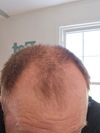
The conversation discusses changes in scalp texture and appearance in areas of hair loss, with concerns about the suitability of these areas for hair transplants. Users mention issues like fibrosis, inflammation, and thinner skin, advising caution and consultation with clinics before proceeding with transplants.
The post discusses a user's struggle with hair loss and the ineffectiveness of finasteride. Suggestions from the conversation include trying oral minoxidil and considering a 3200 graft hair transplant.
Using high doses of testosterone with RU58841 to create an androgen-free environment for hair regrowth is suggested, but concerns about heart health and the effectiveness of this approach are raised. Alternatives like topical estrogen, progesterone, and other treatments like finasteride and dutasteride are discussed.
A peptide-based delivery system for finasteride shows promise in reducing systemic side effects while maintaining hair growth effectiveness. Combining this with other treatments like minoxidil and RU58841 could enhance results with lower systemic absorption.
The conversation discusses a user's plan to inject NAD+ and GHK-Cu into their scalp to improve hair health, with concerns raised about the risks of infection and necrosis. Alternatives like finasteride, dutasteride, microneedling, oral minoxidil, and scalp massages are suggested.
Hair loss and its potential treatments, such as minoxidil, finasteride, RU58841, dermarolling, and supplements. It discusses whether miniaturized follicles can be revived to grow again or must shed for new growth to appear.
A 19-year-old has been using finasteride, minoxidil, and microneedling to treat hair loss with no regrowth, feeling mentally affected by it. Advice given includes continuing treatment, considering a hair transplant, addressing potential vitamin deficiencies, and possibly switching to dutasteride or adding ketoconazole shampoo.
A 17-year-old experiencing aggressive hair loss since December 2023 is using finasteride, vitamin D, and a biotin supplement but cannot use minoxidil due to dandruff. They have also undergone two PRP treatments and are seeking further advice.
The user experienced significant hair improvement after one year using topical finasteride and minoxidil, combined with a hair transplant at the front. They switched from oral to topical finasteride due to side effects and are satisfied with the results, especially at the temples.
Hair loss is linked to cellular physiology and the IGF-1 to TGF-B1 ratio, not just androgen sensitivity. The theory lacks evidence, while finasteride and minoxidil are effective treatments.
The user "Bishiop" shared a comparison of their hair progress over 9 months using oral finasteride, topical minoxidil, and microneedling. Other users commented on the results and shared their experiences with hair loss treatments.
A user is considering switching from oral to topical finasteride to reduce systemic DHT impact and is exploring ethossomal finasteride for better skin penetration and potential hair regrowth. They found ethossomal finasteride in Brazil and are seeking opinions on its effectiveness compared to other topical delivery methods.
Dermatologists have differing opinions on hair loss treatments, with some using topical dutasteride, oral minoxidil, exosome therapy, PRP, and various other therapies. The user plans to use a topical solution of dutasteride, minoxidil, tretinoin, PRP, and LLLT.
PP405 is a promising molecule that may reactivate dormant hairfollicles, potentially offering a new treatment for hair loss. It is in phase 2 trials, with possible availability between 2027 and 2030.
The conversation discusses Shiseido's RepliCel Hair-01 technology for hair regeneration, which aims to stop hair loss with minimal regrowth. Treatments mentioned include Minoxidil, finasteride, and RU58841.
Pelage PP405 is a new hair loss treatment in trials, potentially reactivating dormant hairfollicles without affecting hormones. Results are expected in February 2025, offering an alternative to minoxidil and finasteride.
Finding treatments for regrowth on the hairline which have not been successful so far, with suggestions of maintaining what they currently have and considering a hair transplant as an option.
The conversation discusses the potential market release of a hair loss treatment called GT20029 by Anageninc, with users expressing interest and discussing the importance of safety and effectiveness. Some users plan to contact Anageninc to show demand for the product.
Hair loss discussion mentions ineffective treatments like Nutrafol and low-level laser therapy sold by transplant clinics. Trust in hair restoration doctors questioned due to promoting these treatments.
A 31-year-old male experiencing hair thinning since age 25-26 uses minoxidil, finasteride, a red laser cap, and microneedling to promote hair growth. Users suggest reducing microneedling frequency to once a week to avoid damaging hairfollicles.
Blocking DHT is not a complete solution for hair loss; instead, altering the scalp's response to DHT may be more effective. Topical finasteride and minoxidil are current treatments, but future approaches may involve bioengineering, gene therapy, and inflammation control.
Microneedling may risk scarring, potentially complicating future hair transplants. Alternatives like tretinoin with minoxidil are suggested for better hair growth.
Plant-based exosomes for hair loss lack scientific evidence and are considered high-risk with low evidence. Combining PRF with minoxidil and finasteride is suggested as a better option.
The user is considering a hair transplant and is using topical finasteride, minoxidil, antiandrogens, ketoconazole shampoo, and serenoa repens. They are deciding between surgeons Dogan Turan and Bruno Pinto, and are concerned about the technique and potential complications due to diffuse hair loss.