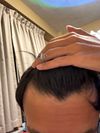
A 47-year-old has been using finasteride for 25 years for hair loss, but it's less effective now. Suggestions include switching to dutasteride, stopping anastrozole, and trying minoxidil, microneedling, and possibly TRT.
The user experiences heavy shedding after one year of using 1mg oral finasteride and twice-daily topical minoxidil, recently adding microneedling and daily Nizoral. They also take supplements like vitamin D and biotin.
A 57-year-old man with severe hair loss since age 14 tried various hair loss treatments over two years, including finasteride, dutasteride, minoxidil, and supplements, with some minor regrowth. He also experimented with topical treatments and microneedling, but results were not cosmetically significant.
IGFBP‐rP1 shows potential for treating androgenic alopecia by influencing hair cycle transitions. Increasing IGF-1 levels may have similar effects to Minoxidil and 5-AR inhibitors in reducing hair loss.
Phase II for TDM-105795 for Androgenic Alopecia is set to begin in April 2023. The study aims to evaluate the efficacy and safety of TDM-105795 in male subjects.
The user shared minimal results from using JXL-069 for hair loss, noting a slight lengthening of vellus hairs and plans to switch to a prodrug variant due to limited effectiveness. They also mentioned using finasteride and minoxidil, which have plateaued in results.
A user who shared progress pictures of their scalp using a microscope camera, demonstrating the difference between healthy and miniaturized hair. Various explanations for the cause of this were discussed, such as DHT build-up in scalp sebum causing an autoimmune response leading to inflammation and eventual hair loss, with some suggesting a do-it-yourself treatment involving adding ascorbic acid powder to shampoo.
Hair loss treatments discussed include cosmeRNA, minoxidil, finasteride, RU58841, and pyrilutamide. Users debate effectiveness, side effects, and upcoming treatments, with some expressing skepticism and others optimism.
User asks where to purchase exosomes/AAPE for microneedling hair loss treatment. Links to research on hair regeneration therapy, stem cell therapy, exosome therapy, and dermal exosomes provided.
Men losing hair at a younger age, with theories including lifestyle factors like diet, pollution, and technology use. Treatments mentioned include Minoxidil and finasteride.
The conversation is about a 21-year-old male inquiring about the effectiveness of exosome therapy for hair thinning on the crown and considering whether to start Minoxidil while already on Finasteride and having had exosome injections 15 days ago.
How androgens, including testosterone, can cause hair follicles to miniaturize in people with sensitivity to androgens, and treatments such as finasteride, dutasteride, minoxidil, RU58841, or fluridil may be used in combination for long-term treatment.
The user experienced hair regrowth using a routine of topical minoxidil, dutasteride, and microneedling, and is considering adding a peptide product for increased hair density. Other users suggest maintaining the current routine, monitoring heart health due to oral minoxidil, and considering cost-effective alternatives.
The conversation discusses concerns about RU58841 degrading when exposed to light and transferring pyri to a dark glass bottle to prevent this. The user keeps the pyri out for only two minutes before storing it in a dark place.
Stopping microneedling may result in losing hair gains, as it enhances the effectiveness of treatments like minoxidil. Combining microneedling with minoxidil and finasteride is more effective than using microneedling alone.
A serum containing Centella asiatica extracellular vesicles, IGF-1, FGF-7, and caffeine significantly improved hair thickness, density, length, and reduced hair loss after 56 days. The conversation also discusses how treatments like finasteride, minoxidil, and ketoconazole address different aspects of hair loss by reducing DHT, improving blood flow, and lowering inflammation.
The conversation discusses using a TCA 35% chemical peel on the scalp to potentially improve hair growth by addressing fibrosis and enhancing the effectiveness of topical treatments. The user also mentions trying microneedling and other methods like topical metformin and dutasteride for hair regrowth.
Tapering off minoxidil from 5% to 2% and gradually reducing frequency may help minimize hair loss, but some loss might be unavoidable. The discussion focuses on managing hair loss when discontinuing minoxidil.
The conversation discusses DIY cosmetic procedures like PRP, mesotherapy, and micro-needling, with some users experimenting with Minoxidil, finasteride, and RU58841 for hair loss. It highlights a community of mostly older women performing these treatments themselves.
A new plant-based serum is claimed to regrow hair in weeks, but users are skeptical about its effectiveness and the reliability of the study. Ingredients like Centella Asiatica and IGF-1 are mentioned, but many doubt the serum's superiority over existing treatments like Minoxidil and finasteride.
GT20029 is a new hair loss treatment in Phase 3 trials in China, using PROTAC technology to target androgen receptors, potentially with fewer side effects than finasteride and minoxidil. VDPHL01, a second-generation minoxidil, is also mentioned as potentially more effective.
Hair loss treatments are being tested on mice, with methods like minoxidil and stem cell therapy showing promising results. However, human trials are still years away, leading to humorous frustration about mice benefiting first.
Maintaining good hair density is more important than preventing a receding hairline, as it can enhance a mature look. Treatments discussed include finasteride, minoxidil, dutasteride, and RU58841.
Follistatin, known for inhibiting myostatin and promoting muscle growth in mice, is being discussed as a potential treatment for hair loss. Specific treatments mentioned include Minoxidil, Finasteride, and RU58841.
The conversation discusses why CB-03-01, a potential hair loss treatment, isn't widely discussed despite evidence of its effectiveness and safety. Some users mention other treatments like melatonin, procianidin b2, and RU58841, debating their effectiveness and safety.
A 33-year-old man experienced diffuse thinning and hair shedding due to sleep deprivation and low testosterone. After starting hCG treatment, he noticed hair regrowth on his temples.
A dermatologist advised stopping minoxidil and trying redensyl serum, while also starting finasteride. Concerns were raised about increased hair loss after stopping minoxidil.