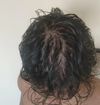
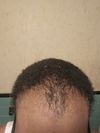
A 21-year-old with diffuse thinning hair is considering RU58841 due to side effects from topical finasteride and is asking for the lowest effective dose and time to see results from RU58841 users.
A 17-year-old is experiencing hair thinning all over, possibly due to low vitamin D levels. They are advised to consider vitamin D supplementation and check other factors like iron or thyroid function.
A 23-year-old male experienced nipple sensitivity after starting finasteride for hair loss and stopped using it due to concerns about gynecomastia. He is worried about the risk of developing gynecomastia if he resumes finasteride, especially with plans to increase muscle mass.
A 19-year-old trans man has been using Finasteride 1mg for a little over two months and is concerned about worsening hair loss, noting a fuzzy and soft hairline and crown. The user is upset as the hair loss appears worse than before starting the treatment.
A 17-year-old with thinning hair is considering using Revalid, a supplement with ingredients like biotin and zinc, based on parental recommendations. Another user suggests that supplements could help since the hair thinning doesn't seem to be androgenic alopecia.
Extended-release oral minoxidil (VDPHL01) shows promising results for hair growth with improved safety, achieving significant hair count increases and minimal side effects compared to placebo. The treatment is designed to maintain effective concentrations while reducing side effects, making it a safer option for those who cannot tolerate standard minoxidil.
A 26-year-old male with grade 3 hair loss is using 2.5 mg oral minoxidil, 1 mg finasteride, 5% minoxidil, ketoconazole shampoo, and kLM d3. He plans to post progress pictures every 6 weeks and is seeking suggestions.
The user experienced initial improvement in hair loss with oral finasteride and minoxidil but later faced increased shedding and thinning. They switched to dutasteride, hoping for better results, while continuing topical minoxidil.
A user with stage 1 hair loss is inquiring about the release date of GT20029, hoping to use it instead of Minoxidil and finasteride, as they believe it has better results. They want to know if it will be available in the next couple of years.
Pyrilutamide is a selective AR antagonist with a high binding affinity, making it effective in competing with DHT for androgen receptors. The 1% concentration is more effective than the 0.5%, but the latter may suffice for mild hair loss; the drug is considered a good option for those avoiding 5AR blockers due to side effects.
RU58841, a potential hair loss treatment, was not commercialized due to marketability issues and lack of long-term safety data. Concerns about its formulation and delivery methods further complicate its use.
Treating Seborrheic Dermatitis, a fungal scalp condition which can cause hair loss. Treatments discussed include antifungal shampoos, cold showers, exfoliating the scalp, taking Vitamin D, and stimulating the prostate through the anus.
The conversation is about a person experiencing significant hair loss in the donor area after a hair transplant, with others suggesting it might be shock loss. The person is taking oral minoxidil and dutasteride to help with the issue.
The user is 4 months into using a treatment with 5mg Dutasteride and 1.25mg Minoxidil daily, along with vitamin K2 and weekly dermastamping. They report some hairline improvement but no noticeable change in the crown area yet.
The conversation discusses the failure of Phase 3 trials for the hair loss treatment KX-826, with no significant difference found between the drug and placebo. Some users express disappointment and skepticism, while others discuss alternative treatments like Minoxidil, finasteride, and RU58841.
Pelage Pharmaceutical raised $120 million to continue research on PP405, a promising hair loss treatment that showed a 20% increase in hair density in 31% of men during a Phase 2a trial. The treatment was well-tolerated, with no systemic absorption, and Phase 3 trials are planned for 2026.
The conversation is about analyzing receded temple closeups for signs of fibrosis, scarring, or androgenetic alopecia (AGA). Specific treatments like Minoxidil, finasteride, or RU58841 are not mentioned in the conversation.
The user is experiencing stage 2 hair loss and thinning, noticing more scalp visibility with short hair. They are considering diet, yoga, scalp massage, supplements, and a serum recommended by their doctor, and questioning if it's safe to stop using the serum and whether to get a blood test since hair loss isn't a family trait.
A 24-year-old experiencing severe hair thinning has been using minoxidil for 2 years but is still shedding hair. A doctor recommended plasma treatment over a DHT blocker for better and healthier results.
A user who experienced hair loss at age 23, but started treatment with finasteride, minoxidil, Nizoral shampoo, dermarolling and biotin vitamins at age 32 and saw significant regrowth results in 1 year. Treatment methods such as rolling their head on the carpet were also discussed.
A 24-year-old noticed hair thinning over 4-6 years and is seeking advice on whether it can be salvaged. Treatments mentioned include Minoxidil, finasteride, and RU58841.
The conversation is about the release timeline for clinical trial results and the availability of Breezula, a hair loss treatment. The user is not comfortable buying it as a research drug from China.
The conversation discusses the link between increased estrogen and autoimmune diseases, with a focus on avoiding soy and milk. It also mentions treatments like Minoxidil, finasteride, and RU58841 for hair loss.
The conversation discusses using a violet ray device for hair regrowth, citing a case where zinc ion treatments showed promising results. It also mentions similar devices like the Growcombr and niostem helmet.
A 21-year-old with a family history of early balding is advised to see a dermatologist to confirm androgenetic alopecia (AGA) and consider treatments like finasteride or dutasteride to prevent further hair loss, and minoxidil, possibly with tretinoin, to regrow hair. Caution is advised with oral minoxidil, and a cardiologist should be consulted before use.
A 24-year-old considering a hair transplant is currently using dutasteride for hair loss. They are unsure about proceeding with the transplant due to concerns about future hair loss and the need to shave their head for the procedure.
A 23-year-old is considering finasteride for hair loss but is concerned about worsening pre-existing mild gynecomastia. They plan to start with a low dose and monitor symptoms, seeking advice from others with similar experiences.