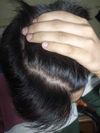
A 30-year-old male with thinning hair and an itchy, oily scalp found that hydrocortisone cream eliminated dandruff and itching and seemed to thicken his hair. He avoided minoxidil and finasteride due to potential side effects and noted that Nizoral and Head & Shoulders worsened his symptoms.
The conclusion of the conversation is that using minoxidil, finasteride, and ketoconazole may not be enough to address hair loss caused by DHT. Some users recommend starting finasteride to prevent further hair loss, while others express concerns about potential side effects.
A user has been losing hair for two and a half years after a tropical trip and illness. A dermatologist prescribed betamethasone valerate 0.1% lotion, but the user is unsure if it's safe or effective for general hair loss.
The conversation is about a female experiencing hair loss and seeking advice on why it's difficult to regrow hair. Specific treatments like Minoxidil, finasteride, or RU58841 are not mentioned.
User experienced hair kinking after starting minoxidil, despite being on finasteride for two years. Another user confirmed similar issues and suggested switching brands due to propylene glycol in minoxidil.
The conversation discusses hair thinning potentially linked to gut health issues and suggests biotin as a possible treatment. It also mentions that hair thinning could be due to male pattern baldness (MPB).
Minoxidil can cause scalp dryness and flaking, leading to hair shedding when exfoliating. Alternatives like oral Minoxidil, finasteride, and ketoconazole shampoo are suggested to manage these issues.
Switching from liquid to foam minoxidil led to hair loss for OP, possibly due to a second shedding cycle. OP experienced allergic reactions to propylene glycol in the liquid form, causing dandruff and itchiness, which improved after switching to foam.
Topical minoxidil with tretinoin is causing redness, stinging, and flaking on the scalp. Reducing application frequency and using anti-dandruff shampoo may help alleviate symptoms over time.
A user is experiencing scalp flaking from a finasteride/minoxidil topical solution and considers using salicylic acid shampoo to remove propylene glycol residue. Another user suggests trying a leave-in conditioner to address dryness and flaking.
A user noticed baby hairs after combing out locs and has been applying castor, rosemary, and peppermint oil daily. They are curious about progress, sharing photos from different stages.
The user is struggling with seborrheic dermatitis and plans to try ciclopirox olamine after finding ketoconazole too drying. They are also using finasteride daily.
A 22-year-old male is experiencing hair loss due to seborrheic dermatitis, not male pattern baldness, and is seeking advice. Suggestions include using Nizoral, sulfate-free and ketoconazole shampoos, cutting hair short, using cold water, avoiding picking scabs, and trying selenium sulfide shampoo or finasteride.
A 28-year-old male is experiencing hair loss, itching, soreness, and numbness on the scalp, with symptoms including dry, brittle hair and scalp irritation. Treatments tried include Nizoral, salt water, various oils, and antihistamines, with limited success; a chemist suggested a possible fungal infection, while a doctor suspected male pattern baldness.
A 17-year-old is concerned about hair loss and shares photos for opinions. A user responds that the hair looks normal but is hard to assess from the images.
The individual has experienced a sore, stiff, and itchy scalp with hair loss for 4.5 years, and has noticed increased thinning and miniaturized hairs, especially at the temples. They have tried ketoconazole shampoo without success and are considering finasteride for treatment.
Shedding stopped for a user after trying various hair loss treatments without success, including Propecia and Minoxidil. The improvement occurred after starting CB (possibly a hair loss treatment), Eucapil, natural sprays with rosemary and cloves, and regular sauna visits.
Minoxidil is causing severe scalp irritation, including itchiness and dryness, for the user. Alternatives suggested include anti-fungal treatments, propylene-glycol-free formulations, and possibly oral minoxidil.
The "DHT itch" is real and likely due to inflammation at the hair follicle, exacerbated by increased testosterone or androgens. Treatments mentioned include dutasteride, minoxidil, finasteride, and various topical solutions.
DHT itch's existence is debated, with some claiming it's real and others saying it's psychological. Finasteride, Ketoconazole shampoo, and addressing scalp conditions like dandruff or eczema may help reduce itchiness.
The conversation discusses a hair loss and scalp care routine involving ciclopirox shampoo, benzoyl peroxide, clindamycin gel, clobetasol propionate, and calcipotriol to manage seborrheic dermatitis, folliculitis, and inflammation. It also touches on the role of diet and other treatments like oral minoxidil and pioglitazone for scalp health.
A user experienced reduced stress and improved hair appearance after getting a buzzcut while using finasteride, minoxidil, and microneedling. The user feels the haircut and treatments may have improved hair quality and filled in patchy areas.
Oral minoxidil caused changes in hair texture, making it curly, dry, and lifeless, raising concerns about whether this is a temporary phase or permanent. Users discussed potential side effects of oral minoxidil, including heart issues, and suggested consulting a dermatologist and monitoring health markers.
Topical Minoxidil and RU58841 can make hair look brittle and thin, possibly due to the propylene glycol in their solutions. Some users experience side effects like heart palpitations with RU58841, while others have no issues.
Finasteride users often experience itchy scalps, which may improve over time, but many rely on ketoconazole shampoo to manage symptoms. Some users find that finasteride helps with hair shedding, but not with scalp irritation, which may require additional treatment.
The trichologist avoids recommending Minoxidil, focusing instead on changing medications monthly for seborrheic dermatitis, resulting in only slight improvement in hair quality and loss. The user is considering starting Minoxidil independently due to slow progress and personal distress.
A female user is experiencing severe hair loss, especially at the crown and front, with broken and dull hair despite using Moroccan oil, shea moisture shampoo, and coconut oil. She seeks recommendations for a clinic or doctor as previous doctors attributed the issue to stress but offered no solutions.