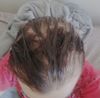
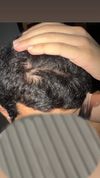
A user shared their 4-month hair regrowth progress using 0.5mg dutasteride and 2.5mg minoxidil, reporting no side effects and significant improvement. The conversation includes discussions on treatment choices, dosages, and personal experiences with hair loss treatments.
Taking dutasteride with a meal containing fat may improve absorption, but consistency in routine is more important than timing. Minor variations in absorption won't significantly affect efficacy due to dutasteride's long half-life.
Dutasteride is effective for hair loss but may cause side effects like decreased sperm count, which might not fully recover after stopping. Users discuss balancing dosages to minimize side effects while maintaining benefits.
TDM-105795 is a potential hair growth stimulant that works differently from minoxidil and could be used alongside it for enhanced growth. It completed phase 2 trials in 2024, with a medium to high chance of release in 2026, but lacks recent updates or phase 3 trial information.
A 25-year-old male using Dutasteride, oral Minoxidil, and Ketoconazole shampoo is experiencing increased hair shedding and vellus hair growth along the hairline. Concerns are raised about whether this is a seasonal shed or a potential setback.
A user was prescribed a combination of 0.6mg dutasteride, 5mg minoxidil, and 1mg zinc daily for hair loss, which is higher than standard doses. Other users suggest starting with lower doses, especially for minoxidil, and recommend seeking a second opinion.
The conversation discusses hair regrowth results using dutasteride, minoxidil, and dermarolling over six months. OP reports significant improvement, especially in the temples, by derma-rolling frequently and applying minoxidil afterward.
The user reported early stage diffuse hair thinning and increased DHT levels after 4 weeks on Finasteride and 8 weeks on Finasteride plus 4 weeks on Dutasteride, despite the medications being authentic and stored properly. They are considering increasing their Dutasteride dosage due to the lack of side effects and are unsure if the treatment is helping their hair.
The conversation discusses the use of dutasteride (0.5 mg daily) for hair loss, with additional treatments like minoxidil, derma rolling, and nizoral shampoo. The user reports positive progress over two years with no significant side effects, emphasizing the importance of consistency and patience.
A 27-year-old male with diffuse hair loss, including the donor area, did not respond to finasteride, dutasteride, or minoxidil. He suspects his hair loss may be linked to a mild connective tissue disorder, possibly affecting the structural support of hair follicles, rather than being purely hormonal.
The conversation is about trying DS Labs SOD supplements for hair loss, which contain ingredients like Genistein, B-sitosterol, and Biotin. The user is considering adding these supplements to their existing hair care routine.
The conversation is about a user planning a blood test to monitor health while on hair loss treatments: Finasteride, Minoxidil, and Dutasteride. Recommendations include testing for androgens, thyroid function, micronutrients, and basic health markers, with additional suggestions for PSA, prolactin, and estradiol.
The user is considering adding liposomal dutasteride to their hair loss treatment, which currently includes topical finasteride and minoxidil. They are exploring different concentrations and application frequencies to enhance hair retention and are also planning to continue using Rogaine.
A user is seeking recommendations for doctors who perform Dutasteride mesotherapy in NJ or PA, as they are having trouble finding one through Google. The conversation focuses on finding a suitable provider for this specific hair loss treatment.
User switched from Finasteride to Dutasteride and oral Minoxidil after dermatologist's recommendation. Others in conversation express interest and support for the new treatment.
Dutasteride reduces DHT more effectively in hair follicles than finasteride, but some individuals still experience hair loss despite treatment. Combining oral and topical finasteride may improve results, and some users experiment with topical dutasteride despite uncertainties about its absorption.
Switching from finasteride to dutasteride worsened hair loss and caused a burning sensation. Users suggest sticking with finasteride, using ketoconazole shampoo, and consulting a dermatologist.
Taking zinc and copper may offset copper depletion and potentially aid hair health when used with finasteride. The user is considering whether to use these supplements alongside finasteride or wait until switching to dutasteride.
A user started taking finasteride 1mg/day for hair loss but hasn't seen results yet. They also take vitamins and asked about adding minoxidil and the effectiveness of LLLT.
The user plans to resume oral dutasteride, topical minoxidil, and add dermarolling and a laser cap to their hair loss treatment routine. They are seeking advice on optimizing these treatments and are concerned about increased shedding after starting the laser cap.
People are discussing switching to Indian generic dutasteride tablets like Dutanol and Dutaheal due to cost concerns, with some users reporting positive results when taken with a high-fat meal. Users have shared experiences with different brands, noting varying effectiveness and side effects compared to finasteride.
The user has been using finasteride and minoxidil, then switched to dutasteride and minoxidil for six months without significant results, noticing thinning after increasing creatine dosage. They plan to consult a dermatologist to explore potential causes beyond androgenetic alopecia.
The user experienced significant hair regrowth using dutasteride 0.5 mg daily, 5% topical minoxidil twice a day, and microneedling over several months. They also used ketoconazole shampoo and rosemary oil, reporting some side effects but overall positive results.
Taking dutasteride daily at higher doses results in more effective DHT suppression compared to every other day dosing, due to its dose-dependent nature and long half-life. Even at lower doses, dutasteride is more effective than finasteride for hair loss.