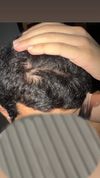
A user discusses a topical treatment combining Minoxidil, Betamethasone Valerate, Canrenone, Finasteride, and Dutasteride for hair loss. The treatment is RX-only and provided by a dermatologist.
The user has been on dutasteride and oral minoxidil for a year with no progress and is considering increasing the dutasteride dose or adding RU58841. Other users suggest consulting a doctor, trying derma needling with topical minoxidil, and note that hair loss treatments can have varying effectiveness.
2-Deoxy-D-Ribose is discussed as a potential hair loss treatment, but skepticism exists due to lack of human testing. The original poster uses a combination of topical Minoxidil, oral Finasteride, topical RU58841, and other treatments, reporting some hair regrowth but not significant results.
The user has been taking finasteride for over a year and is asking if Taurine 1000 mg and I-lysine can be taken with it. They also want to know which medicines or supplements to avoid while on finasteride.
Finasteride and dutasteride are still available in the EU, with a warning about potential suicidal thoughts. The benefits of these treatments are deemed greater than the risks.
The user has been on finasteride for 17 months and recently switched to dutasteride, sharing bloodwork results showing no side effects. They express a wish to have started treatment earlier to save their hair.
The conversation discusses alternatives to finasteride for hair loss, including topical treatments like minoxidil, RU58841, CB-03-01, and dutasteride. Users also mention other options like alfatradiol, topical caffeine, and mesotherapy, while expressing concerns about side effects and the effectiveness of these treatments.
The conversation is about whether dissolving finasteride in water affects its effectiveness. The user is concerned about the impact of water on the medication's efficacy over five days.
The user is using a regimen of topical finasteride 0.3% and minoxidil 6% daily, along with zinc, saw palmetto, and hair supplements, but is unsure about the results and considering adding oral finasteride. Other users share mixed experiences with similar treatments, suggesting patience or switching to oral forms.
A user shared progress pictures after 6 months of using oral finasteride, minoxidil, ketoconazole, and occasional derma rolling for hair loss. Another user complimented the hair improvement but suggested a different hairstyle.
The user experienced side effects from oral finasteride and tried mixing it with liquid minoxidil but faced application issues. They are seeking a 5% minoxidil foam with a maximum of 0.15% topical finasteride concentration.
The conversation is about managing seborrheic dermatitis and hair loss using treatments like Nizoral, Kelual DS, KPL, and MCT oil daily. The user is concerned about the effectiveness and safety of using MCT oil every day.
RU58841 cured seborrheic dermatitis, oily scalp, dandruff, and scalp pain, improving hair health when combined with Minoxidil. Another user noted diet impacts their seborrheic dermatitis and that finasteride hasn't changed their condition.
The user experienced improved hair density after 3 months of oral finasteride and 1 month of oral minoxidil, along with changes in diet, supplements, and hair care. They are unsure if the improvement is due to these treatments or changes in hair care habits.
Monthly microneedling combined with low-dose topical dutasteride shows promising results for hair density and thickness with minimal side effects, especially in the frontal area. Despite its effectiveness, it is not widely discussed or used due to availability and cost concerns.
The conversation discusses using zinc sulphate and azelaic acid to inhibit 5 alpha-reductase activity, which could potentially treat androgen-related skin conditions like hair loss. Combining these with vitamin B6 could enhance the effect, potentially offering an alternative to finasteride.
Finasteride and Dutasteride used in combination with RU58841 and microneedling, as a treatment for hair loss. There was discussion on progress of the treatment and potential other methods to consider.
Delayed release oral minoxidil is seen as a promising advancement for hair loss treatment, offering safer, higher doses and more consistent hair follicle stimulation compared to current options. However, it is not expected to replace finasteride or dutasteride, as it does not prevent androgenetic alopecia.
The efficacy of degrading the androgen receptor through dermal application in DP cells, a delivery system for topical drugs that involves dissolving microneedles, and rosemary oil as an alternative anti-androgen.
The user has been using finasteride and minoxidil, then switched to dutasteride and minoxidil for six months without significant results, noticing thinning after increasing creatine dosage. They plan to consult a dermatologist to explore potential causes beyond androgenetic alopecia.
A man in his late twenties switched from finasteride to dutasteride for hair loss and is sharing his 3-month progress, noting increased shedding but no side effects. Some responders think the treatment is working.
A user is seeing good results with RU58841 for hair loss, noting reduced shedding and thicker hair. They plan to use pumpkin seed oil as a solvent to avoid water content, which they believe reduces the effectiveness of anti-androgens.
Users discussed the effectiveness of Everychem's solution, similar to PP405, with some reporting improved hair thickness and new growth. Concerns were raised about safety and the legitimacy of the product, with some users advising against purchasing research chemicals.
The user mixes their own RU58841 solution and found that increasing the ethanol content improved absorption and reduced scalp itching. A study on minoxidil showed that penetration increased with higher ethanol concentrations, reaching maximum penetration at 90% ethanol.
Finasteride pills don't fully dissolve in a DIY topical solution due to fillers, resulting in residue. Users suggest shaking well before application and note that commercial solutions appear clearer.
The conversation discusses a last-resort hair loss treatment combining topical finasteride, minoxidil, melatonin, and progesterone, with claims that topical finasteride can inhibit up to 52% of scalp DHT. One reply clarifies that progesterone is not an anti-androgen but has anti-androgenic properties because it competes with androgens for receptors.
An 18-year-old experiencing hair loss and seborrheic dermatitis has tried finasteride, dutasteride, and various shampoos without success. They are considering anti-androgens like RU58841 and KX-826 for oil control and dandruff reduction.
The conversation discusses creating a 0.01% topical dutasteride solution mixed with minoxidil for hair loss treatment, with concerns about absorption and effectiveness. Some users suggest that dutasteride needs specific formulation for better absorption, while others recommend oral use for practicality.
A user shared their 13-month experience using finasteride and ketoconazole 2%, reporting significant improvement in hair growth, especially in the crown and temple areas. They also mentioned occasional use of biotin, multivitamins, and zinc, but noted recent increased shedding and hair loss in unexpected areas.
Switching from finasteride to dutasteride led to hair density loss, prompting consideration of returning to finasteride. Consistency with dutasteride and adding RU58841 did not prevent the loss, and users suggest giving dutasteride more time or consulting a dermatologist.