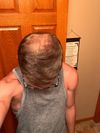
The user experienced significant hair regrowth and improved hair quality after six months of using oral minoxidil, finasteride, and micro-needling. They reported increased libido initially but no other side effects, and they plan to continue the treatment.
A 28-year-old shared surprising hair regrowth progress after 20 days using topical minoxidil, micro needling, GHK-cu, and BPC-157 injections. The user noted a significant reduction in their bald spot and overall hair improvement.
The conversation discusses hair loss treatments, specifically Regenera stem cells and exosomes from 'Cellgenic' umbilical cord donors. The user has been using topical minoxidil 5% and 0.001% estradiol for a year without seeing effects, and another user mentions the importance of microneedling.
A user experienced significant hair shedding and thinning 10 months post-hair transplant despite using minoxidil and topical finasteride. They are considering switching to oral finasteride or dutasteride and are also dealing with scalp conditions like seborrheic dermatitis.
The conversation discusses the potential benefits of sublingual minoxidil for hair loss treatment. It suggests that sublingual minoxidil, which bypasses the liver, may have fewer side effects, greater bioavailability, and could be more effective than oral minoxidil.
A user shared their experience with a beard-to-scalp hair transplant, noting no visible scars and improved hair density using finasteride and minoxidil. The conversation discusses the differences between beard and scalp hair, potential changes in hair texture, and the use of beard hair for increased scalp coverage.
The user switched from oral minoxidil to topical minoxidil and added JXL-069/PP405-3HP, along with topical dutasteride, melatonin, and tretinoin. They also use low-level laser therapy (LLLT) but doubt its effectiveness.
The user shared a one-year update on using oral finasteride (1.1 mg) and oral minoxidil (3 mg) along with ketoconazole shampoo, reporting significant hair regrowth and satisfaction with the results despite some side effects like thicker eyebrows and chest hair. The user encourages others to start treatment early and plans to continue the current regimen for further improvement.
A user shared their positive experience with a hair transplant performed by Dr. Timothy Carman, using 1100 grafts via FUT surgery, and reported satisfaction with the results and minimal scarring. The user continues to use minoxidil and finasteride for hair maintenance.
A 23-year-old experienced significant hair regrowth and regained confidence after one year of using oral finasteride (1mg/day) and oral minoxidil (1.25mg/day) without side effects. The user felt the treatment was life-changing, allowing them to be more social and active.
Using roll-on bottles for applying minoxidil and RU58841 improves application efficiency and reduces product waste. Topical treatments are used continuously, except on microneedling days.
Spraying or drinking topical minoxidil is dangerous and less effective than oral minoxidil. Proper oral minoxidil, like Loniten®, is recommended for safety and effectiveness.
The user has been taking 2mg oral minoxidil and 1mg finasteride but has seen no hair regrowth after 8 months, leading to concerns about being a non-responder. They are considering increasing the minoxidil dosage or switching to dutasteride, while also using keto shampoo and microneedling, but remain skeptical about the effectiveness of minoxidil.
A 20-year-old is experiencing severe diffuse thinning and shedding despite using oral minoxidil for 12 months and dutasteride for 8 months, after previously trying finasteride. They are frustrated with the lack of improvement and considering trying RU58841.
Microneedling is more effective when combined with minoxidil, especially for temple regrowth, but is considered near-useless on its own. Users suggest combining microneedling with oral minoxidil and dutasteride for better results, while some caution against potential scalp damage.
The user is pleased with 4 months of progress using topical minoxidil 5%, finasteride 1mg, and dermarolling 1mm weekly. They are asking if they should expect more results before one year and if they should switch to oral minoxidil.
The user started using minoxidil in September 2024 and finasteride in February 2025, along with dermal rolling, rosemary and clove water, and copper peptide serum for hair growth. They experienced positive hair growth results but had issues with a poorly done scalp micropigmentation (SMP) tattoo, which they are in the process of removing with laser treatments.
The post discusses hair growth progress after using oral minoxidil and oral finasteride for four months, following a hair transplant. The user notes improved hair thickness, particularly in the mid scalp and crown areas.
A humorous discussion about hair loss treatments, specifically mentioning minoxidil and oral use. The conversation includes a satirical take on a worker at a minoxidil factory.
Oral minoxidil has shown positive results for hair regrowth, but concerns about its side effects, such as heart issues, are noted. Adding a DHT blocker like finasteride is recommended for better and more lasting results.
The user documented eight weeks of progress using 5% topical minoxidil, 1 mg oral finasteride, and weekly microneedling. They reported diffuse fill-in and new baby hairs, with plans to taper off topical minoxidil.
A 51-year-old woman switched from Minoxidil to Maneup, a copper peptide treatment, experiencing initial hair loss but later regrowth with different hair texture. Users debated Maneup's effectiveness, with some considering it alongside finasteride.
Users discussed their experiences with minoxidil and finasteride for hair loss, sharing application methods and side effects. Concerns included hair texture changes, safety around pets, and the importance of consulting a doctor before using oral minoxidil.
A 19-year-old is experiencing aggressive hair thinning and has been on finasteride for six months with consistent shedding. They are considering switching to dutasteride and hoping minoxidil will work better afterwards, while others suggest patience with current treatment and adding dutasteride, RU58841, a good diet, and dermarolling for potential improvement.
The user has been using oral minoxidil at 10 mg daily, split between morning and night, alongside finasteride for 7 years, and reports new hair growth at the temples. Many users express concern over the high minoxidil dosage, citing potential health risks, while others question the effectiveness and necessity of such a dose.
Exosomes combined with fractional picosecond laser treatment were effective in treating androgenetic alopecia and promoting repigmentation in white hair patches. The role of exosomes in hair repigmentation, particularly in conditions like poliosis, is not well-studied.
The user is considering switching from topical to oral finasteride due to lack of progress with their current hair loss treatment, which includes topical fin/min, microneedling, Nizoral shampoo, oral minoxidil, biotin, collagen, tretinoin, and hair masks. A suggestion was made to try oral finasteride for potentially better results and to monitor progress over 6-12 months.
A 39-year-old male has been using oral finasteride for 2 months and topical minoxidil 5% for 5 months, along with dermastamping and keto shampoo weekly, to address hair loss. He feels his hair is thicker overall but is concerned about a persistent bald spot.
A user in Egypt is seeking alternatives to oral minoxidil, which is banned there, after stopping topical minoxidil due to concerns for their cat's safety. Suggestions include drinking diluted topical minoxidil or making homemade minoxidil tablets, but these methods carry significant risks and are not recommended.