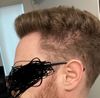
User discusses scalp micropigmentation for denser hair appearance and its benefits compared to lifelong treatments. Special ink is used, which can fade and blur over time but can be topped up.
The conversation is about adding dermarolling to a hair loss treatment routine. The user seeks recommendations for dermarollers, stamps, or pens, emphasizing the importance of quality and proper cleaning.
The user is using a combination of hair loss treatments including dutasteride, minoxidil, RU58841, low-level laser therapy, ketokonozole, supplements, Viviscal, Nutrafol, microneedling, PRP, and scalp Botox injections, but is still experiencing hair shedding and thinning. Despite being on this regimen for two years, the user's hair condition is worsening, and they are seeking advice on what else they can do.
The user is experiencing hair fall and is using a nonsulfate Maui Hibiscus shampoo and conditioner, washing twice a week, and applying a warm mixture of castor and olive oil. They seek advice on a proper haircare regime and product recommendations for low porosity hair.
The user experienced significant hair regrowth using 1mg finasteride every other day and 1ml topical minoxidil daily, with initial shedding but improvement by three months. Microneedling was also used, with adjustments to frequency and needle length for better results.
A user with diffuse thinning shares a tip for improving hair appearance by using a shea butter and coconut oil serum from Trader Joe's at night. They are on finasteride and considering adding minoxidil for better results.
CB-03-01 is considered a failed treatment for hair loss, with future hopes pinned on PP-405 and GT-20029, expected by 2030. Alternatives like hair transplants and SMP are discussed, while some users express frustration over the slow progress of treatments like Breezula.
A 37-year-old male stopped using finasteride and minoxidil due to side effects and switched to derma rolling, scalp massaging, and Revita shampoo, resulting in thicker, healthier hair with new growth. Users discuss the effectiveness of mechanical scalp stimulation, with some sharing similar positive experiences and others expressing skepticism.
The conversation discusses the availability of Breezula, a drug for hair loss, now being sold as an acne treatment, and whether it can be applied to the scalp. Users express skepticism about new hair loss treatments and suggest waiting for FDA approval.
The conversation discusses using estradiol and its derivatives for hair loss without causing feminization. Users mention alternatives like alfatradiol, topical 17b-Estradiol, and DIM (Diindolylmethane).
Use a stamp or roller for microneedling; stamps are preferred to avoid hair pulling. Clean tools with alcohol to prevent infection, and replace stamps every 4-6 uses.
People are discussing the effectiveness of Breezula for hair loss maintenance. Some individuals are using Breezula alone, avoiding finasteride, and one plans to use Breezula after a hair transplant.
The conversation discusses using liquid cetirizine as a topical treatment for hair loss. It mentions Minoxidil, finasteride, and RU58841 as other treatments.
A 34-year-old male is experiencing hair loss on the sides of his head, with inflammation and itchiness, while the top remains thick. He is using topical dutasteride and keto shampoo to address the issue.
A user shared their hair restoration journey using oral and topical finasteride, experiencing side effects with the former. They later switched to microneedling, scalp massages, and vitamins (D3, Zinc, Biotin, B complex, Vitamin E) with mixed feedback on progress.
A new painless microneedle patch shows promise in reversing hair loss. The discussion focuses on potential new treatments beyond common options like Minoxidil, finasteride, and RU58841.
The conversation discusses using verteporfin for hair regrowth and minimizing scarring after hair transplants. Some individuals plan to self-administer verteporfin, potentially in combination with microneedling, as an alternative to hair transplants.
Users discuss making topical finasteride solutions by dissolving crushed tablets in ethanol and propylene glycol, with concerns about residue affecting effectiveness. They also mention using minoxidil and oral finasteride, noting some hair regrowth and no side effects from topical use.
A 27-year-old Asian male is treating hair loss with 1mg oral finasteride, topical minoxidil twice daily, and 1.5mm microneedling weekly. The discussion is about his progress with these treatments.
Peptides, specifically GHK-Cu, are being considered for hair growth benefits, such as increasing blood flow to the scalp and preventing hair follicle shrinkage. A user reported starting GHK-Cu after hearing it made a friend's hair thicker.
A user's experience with microneedling monotherapy and potential treatments such as finasteride, minoxidil, Stemoxydine, rosemary oil, peppermint oil, and RU58841 for reversing hair loss.
A potential new hair loss treatment, HMI-115, and the possibility of discontinuing finasteride in favor of it. The conversation also includes discussion about other benefits of using finasteride.
The conversation discusses hair loss treatments, including microneedling, Nizoral, LLLT, Minoxidil, and Finasteride. The user experienced initial shedding reduction with Nizoral and LLLT, but shedding resumed with Minoxidil and Finasteride, which is considered a normal part of the treatment process.
A user visited a dermatologist for hair loss concerns and was prescribed a hair lotion called "Lotion revolotion evdermia," which is meant for hair toning, hydration, and anti-aging, not regrowth. The user found the dermatologist's behavior and the prescription to be questionable.
The conversation is about the preference for using a derma stamp over a derma roller for hair loss treatment, with users discussing its efficiency, needle material, replacement frequency, and personal experiences. Specific treatments mentioned include microneedling with a derma stamp.
The conversation discusses hair loss treatment options, focusing on finasteride and its potential effects on gynecomastia. The user is considering finasteride while managing hormone levels with supplements like boron, vitamin D, zinc, magnesium, and P5P, and is advised to consult an endocrinologist for further evaluation.
An 18-year-old male is experiencing significant hair shedding, particularly from the back of his head, despite normal blood test results except for slightly low vitamin D. A dermatologist prescribed minoxidil for receding temples, but the cause of the shedding remains unclear.