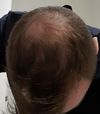
A 21-year-old is using a topical solution with minoxidil and finasteride for hair loss, along with supplements and specific shampoos, and is considering switching to oral treatments if no progress is seen in a few months. They are concerned about diffuse thinning and potential future hair transplants, and are exploring additional treatments like microneedling and tretinoin.
A user's progress pictures after taking finasteride, minoxidil and dermaroller treatments for hair loss over the past two months. Other users replied to offer advice and support on whether there is hope for hair regrowth.
The user is not seeing success with 0.025% topical finasteride for hair loss after four months and is experiencing less side effects compared to 1mg oral finasteride. Another user suggests that it might be too soon to see results and recommends trying it for a year before making a decision.
Vitamin C mixed with shampoo stopped shedding and promoted hair regrowth after 1.5 years. Both the person and their wife experienced significant hair loss reduction with this method.
The user has been using finasteride and oral minoxidil for hair loss but hasn't seen improvement and is quitting nicotine and caffeine to see if it helps. Some believe quitting nicotine improved their hair health due to better blood flow, while others are skeptical about the impact of blood flow on hair loss.
N-Acetyl-Cysteine (NAC) was found to improve hair parameters in men with early-onset androgenetic alopecia, showing increased terminal hair count and decreased vellus hair count, with good tolerability. NAC, used alone or with minoxidil, may help due to its antioxidant properties, though its effectiveness can vary among individuals.
User shares 9-month progress using topical Fin/Min formula (10% Min, 0.1% Fin) for hair loss, with significant improvement in crown area. Others discuss experiences, side effects, and application methods for the treatment.
The user recommends washing hair twice daily with glycerin soap, using finasteride and minoxidil, avoiding cigarettes and alcohol, and maintaining a diet rich in fruits and vegetables. They claim these methods have significantly improved their hair health over 25 years.
A user asked if anyone who didn't respond to minoxidil saw improvement after adding tretinoin. One person replied they saw hair growth on their hairline after using a combination of minoxidil, finasteride, and tretinoin, suggesting tretinoin may have made them respond to minoxidil.
A user shared their year-long hair loss treatment using minoxidil, microneedling, and scalp massages, reporting moderate hair growth and stabilization. They suggest starting early with less harmful methods and consider adding finasteride or dutasteride if needed.
Treatments for hair loss, including finasteride, dutasteride, minoxidil, ketoconazole, microneedling, and low level laser light therapy, which aim to reduce DHT production, increase cell absorption and blood flow, and stimulate epidermal stem cells. It also stresses the importance of patience when using these treatments.
The conversation humorously outlines the progression of hair loss and the increasing desperation for treatments, starting with vitamins and dermapen, moving to finasteride, then to dutasteride and experimental chemicals, and finally to acceptance with shaving or hoping for hair cloning. Some users agree with the accuracy, while others question if it's a joke.
The user had a hair transplant in 2020 and later learned they needed to continue medication for hair loss. They shared a 5-month timelapse video of their hair regrowth using topical finasteride/minoxidil, microneedling every 3 weeks, and ketoconazole.
The user is considering a hair transplant and is using topical finasteride, minoxidil, antiandrogens, ketoconazole shampoo, and serenoa repens. They are deciding between surgeons Dogan Turan and Bruno Pinto, and are concerned about the technique and potential complications due to diffuse hair loss.
A user is considering whether to continue using RU58841 or switch to hair system patches for a receding hairline, while already using finasteride, oral minoxidil, and microneedling. Another user suggests buying RU58841 in powder form to save money and notes the original poster's hair has significantly improved.
A user trying to avoid an expensive hair transplant, and the replies suggesting they wait two years on treatment before deciding if they need a transplant or not.
The user experienced significant hair regrowth over 10 months by using 1.5mg oral finasteride and minoxidil daily, along with weekly derma stamping, after a previous hair transplant and initial thinning. The conversation highlights the importance of using DHT blockers post-transplant to maintain results.
TGF-B affects hair growth, both causing stem cell division and death depending on amounts. Amplifica's treatment injects Scube3 to increase TGF-B for hair growth.
A 29-year-old shared their hair recovery progress using a liposomal topical finasteride/minoxidil solution, LLLT helmet, and vitamins, noting that transplants were only on the hairline. They highlighted the effectiveness of their regimen and addressed skepticism with photos.
A user shared their positive experience and results 10 months after a hair transplant at Mercure Istanbul Clinics, using 3000 grafts. They expressed satisfaction with both the outcome and the clinic's service.
A 35-year-old male shared his hair restoration journey, starting with minoxidil and finasteride, which improved his hairline and crown, followed by a hair transplant in November 2024. He stopped finasteride to conceive, experienced some shedding, and is now considering switching to dutasteride while continuing minoxidil.
A user shared their 12-month update after a 1600-graft hair transplant in Korea, with mixed reactions about the necessity and results. The user is not currently using minoxidil or finasteride but plans to consult a doctor about it.
The user tried minoxidil 5% for 3 years with little improvement, then switched to a 15% minoxidil with 0.1% finasteride solution once daily and started using pyrilutamide, resulting in significant hair regrowth over time. They are considering a hair transplant but are continuing with topical treatments to maximize hair growth first.
A user's hair regrowth journey involved a hair transplant and using RU58841, finasteride, and minoxidil, with side effects managed by other medications.
The conversation discusses the benefits of combining scalp stem cell treatments and exohealer with RF microneedling before a hair transplant. The original poster recommends these treatments for better results.
A 46-year-old man is using minoxidil, finasteride, and derma rolling for hair regrowth but is unsure of the results and considering a hair transplant. Many suggest he looks good bald and recommend continuing treatment or trying scalp micropigmentation.
The user has experienced solid regrowth after 8 months on finasteride and is considering adding minoxidil to the regimen. They are contemplating whether to continue this treatment for a year or opt for a hair transplant.
The user has been using finasteride and minoxidil for 5 years to prevent hair loss and is considering adding dutasteride for regrowth or opting for a hair transplant. Suggestions include trying dutasteride, oral minoxidil, microneedling, and possibly a hair transplant for better results.