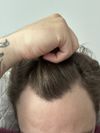
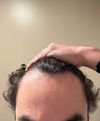
User experienced hair loss after starting dutasteride, but saw regrowth with finasteride. They wonder if dutasteride can cause initial shedding but eventually lead to hair regrowth.
How androgens, including testosterone, can cause hair follicles to miniaturize in people with sensitivity to androgens, and treatments such as finasteride, dutasteride, minoxidil, RU58841, or fluridil may be used in combination for long-term treatment.
A 28-year-old is assessing their hair loss on the Norwood scale, considering adding topical minoxidil and dermastamping to their current regimen of oral finasteride and minoxidil. They feel their hair loss is worsening and seek opinions on their condition.
The conversation discusses the use of trichoscopy to predict hair loss patterns and inform treatment approaches. Treatments mentioned include minoxidil, finasteride, and dutasteride, with varying effectiveness based on gender-specific hair loss patterns.
The user has seen no regrowth after 1 year and 2 months on finasteride, despite increasing the dose, and is inquiring about the potential of future treatments like verteporfin and gt20029 for hair regrowth.
GT20029 and PP405 are discussed as potential alternatives or complements to finasteride for hair loss treatment. GT20029 is entering phase 3 trials, while PP405 is seen as promising for regrowing hair and possibly eliminating the need for other treatments.
The user has DUPA and suspects autoimmune activity as a cause. They have tried various treatments including finasteride, minoxidil, dutasteride, pyrilutamide, estrogel, hydrocortisone, and clobetasol, and are now seeking a long-term immunosuppressant.
Topical Vitamin D3 may stimulate hair growth and has been used for Alopecia Areata. There is a question about the lack of research on its use for Androgenetic Alopecia (AGA).
The user experienced hair loss after initially seeing positive results from using dutasteride and oral minoxidil. They are concerned about the hair shedding and wonder if stopping a multivitamin contributed to the issue.
The conversation discusses Melatonin's potential benefits for AGA and a product called "Asatex" by ASATONA AG. The company was uncooperative when contacted for purchase inquiries.
A 15-year-old is concerned about hair loss, possibly at Norwood 2 or 3, and is using shampoos and conditioners recommended by a trichologist. Suggestions include considering topical minoxidil and consulting a doctor about topical anti-DHT treatments like finasteride or RU58841, but avoiding 5-alpha-reductase inhibitors at this age.
Experimenting with trestolone as a treatment for hair loss in an attempt to avoid DHT-related treatments such as finasteride and dutasteride, and discussing the potential effects of its receptor selectivity on the androgen receptors in the scalp.
Bimatoprost and latanoprost are being considered for scalp hair growth, with concerns about side effects like skin darkening and fat loss. A user warns about potential chemical burns from latanoprost.
The conversation discusses various absurd theories about the causes of male pattern baldness, with some users suggesting treatments like oral dutasteride. It highlights misinformation and humorous myths, such as hair loss being linked to testosterone levels or masturbation.
User asks if spironolactone can stack with finasteride and pyrilutamide for hair loss treatment. They question why spironolactone is associated with feminizing effects, while RU/pyri/fluridil, which work similarly, are not.
The conversation discusses androgen receptor degraders for hair loss, highlighting their potential advantages over traditional AR blockers like RU58841 and pyrilutamide. Concerns about the safety and cost of these treatments are also mentioned.
The conversation discusses how Caucasian men are more likely to experience hair loss due to genetic predisposition, with factors like the androgen receptor on the X chromosome playing a significant role. The user also expresses confusion about the evolutionary reasons for hair loss, especially in colder climates where it would seem beneficial to retain hair for warmth.
A 19-year-old is concerned about going bald and disagrees with their parents who suggest therapy, believing hair loss will negatively impact their life. Some suggest therapy can help with the emotional aspects, while others support using finasteride and focusing on what makes the individual happy.
RU and Pyri block androgen receptors to prevent hair loss but may also hinder hair regrowth since they prevent testosterone, which can stimulate hair growth, from binding to these receptors. The user is questioning if this understanding is correct.
A user experienced facial swelling while taking spironolactone for androgenic alopecia, despite its diuretic properties. They are unsure about increasing the dose due to this side effect.
A female user is experiencing heavy hair shedding and receding temples, possibly due to low ferritin levels. She is using oral minoxidil, iron supplements, and ketoconazole shampoo, and is hesitant to start spironolactone.
Pyrilutamide shows promising hair growth results, but skepticism exists due to potential biases and lack of blinding in the study. Concerns about side effects and legitimacy of the product persist, with comparisons to finasteride and discussions on post-finasteride syndrome.
A 20-year-old is experiencing hair thinning and is considering Clascoterone and Minoxidil as treatments, avoiding finasteride due to concerns about fertility and hormones. A suggestion was made to use Clascoterone for local DHT targeting and combine it with Minoxidil for maintenance and regrowth while avoiding systemic side effects.
The conversation discusses the potential use of verteporfin for hair loss treatment, with one user mentioning their surgeon's interest in trying it and another noting its research status and clinical use as a YAP inhibitor. Some users debate the market size, availability of generics, and the optimism in the hair loss community regarding new treatments.
The user is discussing hair regrowth after 3.5 months of using finasteride, questioning if the new growth is baby hairs. They compare photos from December to the present to assess progress.
The conversation discusses maintaining hair regrowth using minoxidil and finasteride and whether using gt20029, which degrades androgen receptors, would affect this. Fluridil, a similar treatment, can disable over 90% of active androgen receptors.
41-year-old female experienced slow hair thinning, took finasteride for a year, then switched to spironolactone. Irregular periods occurred, seeking advice on long-term side effects and considering a third medication.
GHK-Cu injections led to unexpected temple hair growth for someone who had been using minoxidil and finasteride for over a decade. The user plans to continue using GHK-Cu and experiment with a DIY AHK-Cu serum.