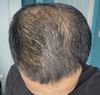
User shares one-year hair transplant results with 3633 FUE grafts. Responses discuss improved appearance, hairline looking pluggy, and doctor's location in Ottawa, Canada.
A user shared a hair growth stack using minoxidil sulfate, valproic acid, bimatoprost, blue copper peptide, and other ingredients, emphasizing a gel-based formula for better skin tolerance. Another user suggested adding a 5-alpha-reductase inhibitor like finasteride or dutasteride for more effective long-term results.
Hair follicle stem cells remain in bald individuals, but progenitor cells do not, raising questions about hair regrowth claims by Pelage. PP405 is discussed as a potential treatment, with skepticism about its effectiveness compared to existing treatments like Minoxidil and Finasteride.
The FDA will now require only one clinical trial for drug approval, potentially speeding up the release of hair loss treatments like PP405. Pelage is expected to present full results of PP405 Phase 2a trials and move to Phase III in mid-2026.
A user experienced worsened hair condition after a PRP session and is considering stopping further sessions. They are using a Dermapen, electric massage, iron, saw palmetto, and plan to start minoxidil, but have had side effects with finasteride and are advised to consider dutasteride under medical supervision.
The conversation discusses a new model for understanding androgenetic alopecia (AGA), linking it to dietary and lifestyle factors similar to PCOS, and highlighting the role of DHT, vascular damage, and inflammation. Treatments mentioned include Minoxidil, finasteride, and RU58841.
A user shared progress pictures of a hair transplant from Padra Clinic in Toronto, claiming 8000 hairs were transplanted for $4000 CAD. The post faced skepticism, with users questioning the results and clinic's credibility, while the user mentioned using zinc, biotin, and hair laser therapy for aftercare.
Current treatments like finasteride, minoxidil, and derma rolling are considered the best for hair loss, while new treatments such as GT20029, PP405, and others are in various trial phases with results expected in the coming years. There is cautious optimism about the affordability and effectiveness of these upcoming treatments.
The conversation discusses potential future hair loss treatments, including SCUBE3, hair follicle cloning, and GT20029, with mentions of past disappointments like CosmeRNA and hopes for treatments like Verteporfin for infinite donor hair.
The post is about a user's hair transplant results after one week, with 4000 grafts implanted. The conversation includes discussions about the healing process, shedding phase, and the number of grafts used.
RU58841 in glycerin may cause less irritation than in PG form, but its effectiveness might be reduced. Users discuss the potential trade-off between irritation and efficacy.
PP405 is progressing to Phase 2b trials, with results expected in late 2025 or early 2026, and potential Phase 3 trials in 2026. Some users experienced side effects from finasteride and are hopeful for PP405 as an alternative treatment.
The user had a hair transplant with 2,000 grafts in 2017, and after four and a half months of using finasteride, minoxidil, derma rolling, and Boton shampoo, they are seeing hair regrowth including the return of their widow's peak. They are considering switching to RU58841 and a deeper derma rolling treatment.
User shared 8-month progress with finasteride 0.5 mg 4 times a week and gluten-free diet for 5 months, improving hair loss. Plans to try microneedling soon.
A user shared their positive experience with scalp micropigmentation (SMP) to cover hair thinning and a scar, choosing it over hair transplants due to its non-invasive nature and realistic results. They recommend SMP for those struggling with hair loss, emphasizing the importance of finding a trusted artist.
A user who had two hair transplants and is still concerned about their crown area, despite other people reassuring them that it looks normal. The advice given was to use Minoxidil, Finasteride, SMP, and to consider speaking with a therapist.
The conversation discusses the use of Finastopic, a carrier for finasteride solutions by Isdin, and compares it to a standard propylene glycol (PG) solution. The user was prescribed a 1% finasteride solution using Finastopic and has been using a self-compounded 0.025% topical finasteride with minoxidil.
The user is hesitant to use finasteride due to potential hormonal side effects and is waiting for the release of pyrilutamide, a new hair loss treatment. Other users suggest trying finasteride, warning about potential regret if hair loss progresses in the meantime.
The user tried a product labeled as PP405 from Umbrella Labs for hair loss but saw no changes, and it was revealed to be a fake or misidentified product. The user is also using finasteride, minoxidil, and other treatments but is still experiencing hairline issues.
The conversation is about the availability of the research chemical GT20029 for hair loss treatment and when companies like Anageninc will have it. Specific treatments mentioned include Minoxidil, Finasteride, and RU58841.
The conversation discusses Kevin's accurate information on hair loss treatments and highlights Dr. Bloxham's ongoing work with Verteporfin on FUT scars, suggesting people follow Dr. Bloxham's YouTube for updates. It also thanks Haicafe and Melvin from the hair restoration network forum for their contributions.
A new hair loss treatment involving Keratin Microsphere Gel is discussed, with skepticism and jokes about its effectiveness and comparisons to other treatments. Users are doubtful and make light of the situation, referencing past disappointments and the study's focus on mice.
Probiotics like L. reuteri ATCC PTA 6475 and B. longum BB536 may improve hair growth and density by reducing inflammation and reversing DHT damage. The user is trialing these probiotics personally, ordering them from the U.S. to Canada, and plans to continue if no adverse effects occur.
A user shared their positive experience with a hair transplant at Wimpole Clinic, performed by Dr. Malkani, and discussed using finasteride at a reduced dose due to side effects. They also mentioned avoiding minoxidil due to heart pain and taking supplements like biotin, marine collagen, viviscal, and krill oil.
The conversation discusses various hair growth treatments, including topical and oral minoxidil, microneedling, LLLT, PRP, exosomes, latanoprost, copper peptides, and upcoming treatments like PP405 and Vdphl01. It also covers managing side effects of minoxidil, such as dry scalp, and mentions the use of dutasteride and finasteride for hair loss.
The user underwent a second hair transplant for the crown and mid-scalp, achieving good density. They are using minoxidil, finasteride, and biotin, and considering PRP treatments to enhance growth.
User's 2-month progress with hair loss treatment includes Ket 3x a week, Min 2x a day, Dut 0.5 every other day, Vit D 125mcg daily, and PRP once a month. Users discuss treatment effectiveness, side effects, and alternative solutions.
The user is using a topical solution containing 1% finasteride and 5% minoxidil for hair loss, with water, glycerin, and PEG-40 hydrogenated castor oil as carrier agents. They are questioning if these ingredients are effective carriers after using the solution for three months.
Beard to scalp hair transplants can provide 12,000-15,000 grafts for coverage, with fast recovery time. However, beard hair may grow curly and not suitable for frontal areas.