Betacarotene's effect on hair loss is discussed, with concerns about excessive vitamin A. The user also questions if 15mg melatonin impacts vitamin A levels.
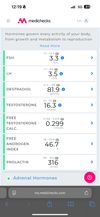
The user shared their hormone levels over time while using finasteride and dutasteride for hair loss. They experienced a significant drop in DHT levels but continued to lose hair, hoping for better results in the future.
You cannot donate blood if you are taking finasteride or dutasteride due to potential risks to pregnant women. Finasteride has a shorter wait time to donate blood compared to dutasteride, and both oral and topical forms can disqualify you from donating.
A user shared progress pictures 1.5 months after a hair transplant of 3500 grafts, using oral finasteride, topical finasteride, minoxidil, and vitamins. They are concerned about potential shock loss and the thinning appearance.
The user is concerned about high prolactin levels and low testosterone levels after stopping finasteride for three weeks. They are considering resuming finasteride but are worried it might further increase prolactin levels.
The conversation discusses using RU58841, a research chemical, for hair loss treatment. The user plans to use it due to side effects from finasteride and minoxidil, despite skepticism about its effectiveness and lack of FDA approval.
The user is considering adding RU58841 to their current hair loss treatment of finasteride and minoxidil, but is concerned about potential side effects like hairline recession and shedding. Some users report positive results with RU58841, while others experience side effects such as chest pain and dizziness.
RU58841 and pyrilutamide are being discussed as potential hair loss treatments, with some users reporting side effects. There is interest in these treatments as alternatives to 5ar inhibitors and oral minoxidil due to concerns about safety and side effects.
Switching from oral to topical minoxidil due to increased heart rate. The user seeks advice on maintaining their hair treatment while managing heart rate concerns.
Gut microbiota significantly influences androgen metabolism, impacting hair loss treatments like finasteride. Probiotics, dietary changes, and fecal microbiota transplants may help manage DHT levels and improve hair health.
Clascoterone and RU58841 are compared for effectiveness in treating hair loss. The discussion involves treatments like Minoxidil, finasteride, and RU58841.
The user switched from finasteride to dutasteride due to side effects and is experiencing fewer side effects with dutasteride, though some scalp itching has occurred. Blood tests show elevated testosterone and estrogen, low DHT, and normal liver and cholesterol levels, leading the user to feel confident in the long-term benefits of dutasteride for hair regrowth.
Oral minoxidil is considered unsafe due to severe side effects and requires close medical supervision, while oral finasteride is viewed as safe and effective. There is debate over the fear-mongering around finasteride and the downplaying of minoxidil's risks, with some users advocating for proper health screenings before use.
Clascoterone is promising for hair loss, showing 24.5% improvement in satisfaction compared to placebo. Users consider it an alternative to finasteride, with concerns about absorption and side effects.
Adding RU58841 to a regimen of 2.5 mg dutasteride and 5 mg oral minoxidil for potential hair regrowth. Some users suggest a biopsy to determine the cause of hair loss, while others discuss the effectiveness and side effects of various treatments.
Kx-826 at 0.5% shows limited effectiveness for hair loss, while 1% is more promising but expensive. RU58841 is considered a more feasible option until 1% kx-826 becomes affordable.
Genetic variations influence how people respond to dutasteride for hair loss, with some benefiting more from finasteride. Dutasteride is effective for most, but genetic differences may cause it to be less effective for some.
Higher doses of dutasteride, like 2.5 mg, may offer more hair growth than 0.5 mg, but the difference is not significant for most people. Many users find 0.5 mg effective, and increasing the dose is often unnecessary unless experiencing severe hair loss.
Mixing RU58841 with cetosomal minoxidil is discussed due to scalp irritation from ethanol PG vehicles. A mixture of the two turned bright pink when left to dry.
The user switched from finasteride to dutasteride for hair loss but faced increased shedding and anxiety, regretting not staying with finasteride longer. Other users shared mixed experiences, advising patience with dutasteride, as it may take up to a year to show results.
The user is concerned about hair loss despite taking finasteride and has a hair transplant scheduled. They experience scalp itching and burning, which hasn't been relieved by various treatments, and another user suggests using ghk-cu & ahk-cu serum and Koshine kx-826/pyrilutamide for relief.
Dutasteride promotes more hair regrowth than Minoxidil. Users discuss combining treatments for better results and share personal experiences with side effects.
A user is using 2.5 mg minoxidil for beard growth and considering increasing the dose to 5 mg for more body hair gains, despite experiencing a bald spot on the scalp. Another user questions the desire for more body hair, suggesting it's not appealing.
RU58841 alone had mixed results; some users combined it with minoxidil. One user experienced side effects with finasteride and maintained with RU58841 and minoxidil, but noted possible chest pain.
A person mistakenly drank an entire bottle of topical minoxidil, leading to ICU admission with shock and heart failure. The incident highlights the dangers of ingesting topical treatments and the importance of proper usage and dosage.
A user started taking 2.5mg Dutasteride for hair loss, along with oral Minoxidil, and is concerned about liver impact. Other users warn about the high dosage and potential health risks.
Finasteride can reduce DHT levels by about 60%, but its effectiveness varies, and some users experience side effects like cognitive issues. Combining finasteride with other treatments like dutasteride or minoxidil may enhance hair regrowth, but individual responses differ.
RU58841 is being discussed for its effects on hair loss. The user has started using RU58841 with finasteride and is curious about its potential for hair maintenance or regrowth.
The conversation discusses the cost and insurance coverage of a comprehensive hormone and DHT blood panel for hair loss, with a focus on finasteride treatment. The user seeks a cheaper alternative to a $700 panel recommended in a video.