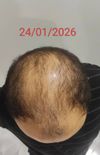
Unusual hair growth can occur in unexpected areas, possibly due to topical treatments like Minoxidil. Such hair may appear suddenly and is often unrelated to typical hairline patterns.
A user shared their 4-month hair regrowth progress using oral finasteride and topical minoxidil, reporting no side effects and positive feedback on their appearance. The post sparked debate, with many users doubting the authenticity of the photos, while others congratulated the user on their impressive results.
A user shared their positive experience with a crown MicroFUE hair transplant at Boston Hair Restoration, highlighting the smooth procedure, minimal pain, and significant growth over 12 months. They used oral minoxidil, finasteride (transitioning to dutasteride), PRP sessions, and a LaserCap, achieving excellent results and full confidence.
A user reported seeing hair regrowth in less than two months after starting a Hims hybrid chewable containing 1.2mg finasteride, 3mg minoxidil, and 2.5mg biotin. They experienced initial shedding but no other side effects and were prescribed the treatment through Hims.
Whether topical caffeine can be as effective for hair growth as minoxidil and finasteride, with various replies discussing the efficacy of these treatments and criticism of Dr. Huberman's research methods.
The conversation is about someone using topical finasteride, minoxidil, tretinoin, and caffeine for hair regrowth, particularly near the temple area. They are asking if the new, smaller hairs will grow and thicken to match their existing hair.
GHK-Cu is being discussed as a potential treatment for male pattern baldness. Users are sharing experiences and asking about its effectiveness and side effects.
The user experienced significant hair regrowth after 7 months using 1mg finasteride and 2.5mg oral minoxidil, with initial lightheadedness as the only side effect. The user feels more confident and believes the minoxidil contributed most to the regrowth.
A 42-year-old male using Minoxidil since June reports hair regrowth and thickening, with additional improvements from vitamin supplements and stress-reducing medication. Suggestions include adding topical finasteride and microneedling for better results.
A 28-year-old shared impressive hair regrowth results after 5 months using 1mg oral finasteride every other day, 2.5mg oral minoxidil daily, a 1mm dermastamp weekly, and daily scalp massages. The user is hopeful for continued progress.
The user experienced significant hair regrowth using 1mg finasteride every other day, 5% minoxidil twice daily, and ketoconazole shampoo. The progress was noted as impressive, with some users questioning the authenticity of the results.
The user has been treating hair loss for 5 years and currently uses 0.5mg dutasteride, 5mg oral minoxidil, and 10,000mcg biotin daily, experiencing the best growth in years without the side effects they had on finasteride. Suggestions from others include starting microneedling, with one comment noting minimal visible hair regrowth.
The user had four DHI hair transplants from 2021 to 2025 and is concerned about the lack of hair thickening despite using treatments like finasteride and minoxidil. They are seeking advice on why these efforts aren't working.
New hair growth from minoxidil and finasteride is not reaching full length, possibly due to slow growth cycles. Users discuss dosing strategies for oral minoxidil to improve efficacy and minimize side effects, with advice against consuming topical minoxidil orally.
A 27-year-old has been using oral finasteride and minoxidil since early 2023, seeing progress in hair growth and density without side effects, but still struggles with thinning at the crown. They are considering adding topical treatments, natural oils, microneedling, or a hair transplant to address this issue.
The user has experienced noticeable hair regrowth after 7 months and 20 days using finasteride, minoxidil, dermastamping, vitamin D, zinc, and ketoconazole shampoo. The user reports improved hairline and self-esteem with no side effects.
The user is considering switching from finasteride to dutasteride for hair loss. They are unsure if GT20029 can regrow hair, particularly on the temples. Another user mentions that regrowth on finasteride can take up to 2 years.
The user experienced hair regrowth and darker hair using finasteride daily, minoxidil nightly, and occasional dermarolling. They noticed significant progress, especially in hair density, and are considering increasing minoxidil use despite itchiness from wearing a hat.
The user shared progress on hair restoration using dutasteride, oral minoxidil, and 2800 grafts, noting significant improvement in hair thickness and coverage. They discussed the importance of continuing DHT blockers like finasteride or dutasteride post-transplant to prevent further hair thinning.
A 20-year-old used finasteride, minoxidil foam, and micro-needling for hair regrowth, experiencing initial shedding but later improvement with minimal side effects. They are happy with the results and seek advice on additional products like rosemary oil for scalp health.
The conversation discusses hair regrowth progress from Norwood scale 4 to 2.5 over a year using daily 8.5-9% RU58841, topical Dutasteride 0.1%, RU58841 5% 1.5 times a week, and daily caffeine redensyl scalp treatment.
A user has been taking 0.5mg oral Finasteride daily for 8 months and is unsure if fine, soft, colorless hairs are regrowth. Other users suggest trying oral Minoxidil for faster results and mention their own experiences with oral treatments.
A new stem cell method for culturing hair follicles is being developed as an alternative to Minoxidil, finasteride, and RU58841. There are concerns about its cost and accessibility despite plans for commercialization.
A 20-year-old male with a high hairline seeks advice on potential hair loss, noting a family history that typically doesn't progress beyond Norwood 2. A user suggests it appears to be a mature hairline rather than hair loss and advises monitoring for changes.
J. Hewitt plans to trial hair multiplication in Japan by the end of 2019. The technique was developed by German researchers at the University of Berlin and formed the company "TissUse."
The user is questioning if they are experiencing hair regrowth after using topical Minoxidil for 4-5 months, noting increased body hair but uncertain head hair changes. Other users suggest the appearance is due to a natural cowlick rather than balding.
The conversation is about a user experiencing positive hair regrowth results using 1mg of dutasteride, 10% minoxidil, and occasional microneedling, after unsatisfactory results with finasteride. Other users express interest in switching to dutasteride and share similar sentiments about finasteride.
The conversation is about influencers sharing their hair growth regime, specifically mentioning the use of finasteride (Fin) and minoxidil (Min). Some users express skepticism about the effectiveness of these treatments and discuss other factors that could contribute to hair loss.
At 4 months post hair transplant, the user is taking oral minoxidil and finasteride, and progress is on track. Users suggest the results are good, with some recommending patience and others offering hair care advice.
The user has been using finasteride, minoxidil, and a dermaroller for 80 days to treat hair loss. Early results are noted, but significant improvement is expected in 3–6 months.